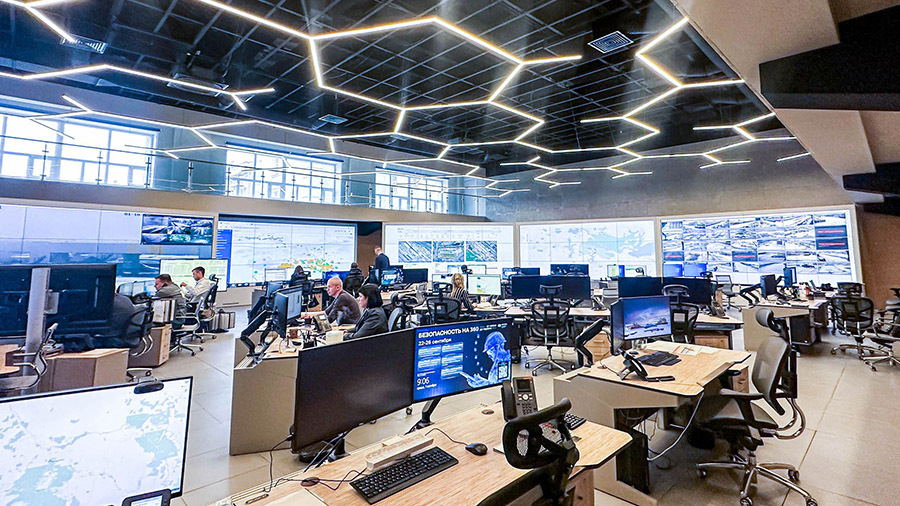
Permafrost thaw has long moved beyond the climate agenda and become a direct factor in industrial safety. Nornickel has built a control and monitoring system that ensures the safe operation of the company’s infrastructure.
For Arctic operators, permafrost thaw increases risks to buildings, structures, tailings storage facilities and other infrastructure essential to uninterrupted production. In such conditions, an asset’s reliability depends not only on construction quality but also on how early a company detects changes and how effectively it responds.
Nornickel treats this challenge as multidimensional — technological, managerial and material to sustainable development. Rather than relying on one-off inspections, the company established a system of continuous monitoring, forecasting and data-driven decision-making. Today this is the largest integrated permafrost, buildings and structures monitoring system in the Arctic.
Nornickel treats this challenge as multidimensional — technological, managerial and material to sustainable development. Rather than relying on one-off inspections, the company established a system of continuous monitoring, forecasting and data-driven decision-making. Today this is the largest integrated permafrost, buildings and structures monitoring system in the Arctic.
Why permafrost needs continuous monitoring
Perennially frozen ground may seem stable, but it is sensitive to warming, vibration, changes in hydrology and anthropogenic loading. Even small changes in ground temperature can reduce foundation bearing capacity and cause structural failure. This is particularly critical in the Arctic, because such processes often develop slowly, and remediation later is far more expensive than prevention.
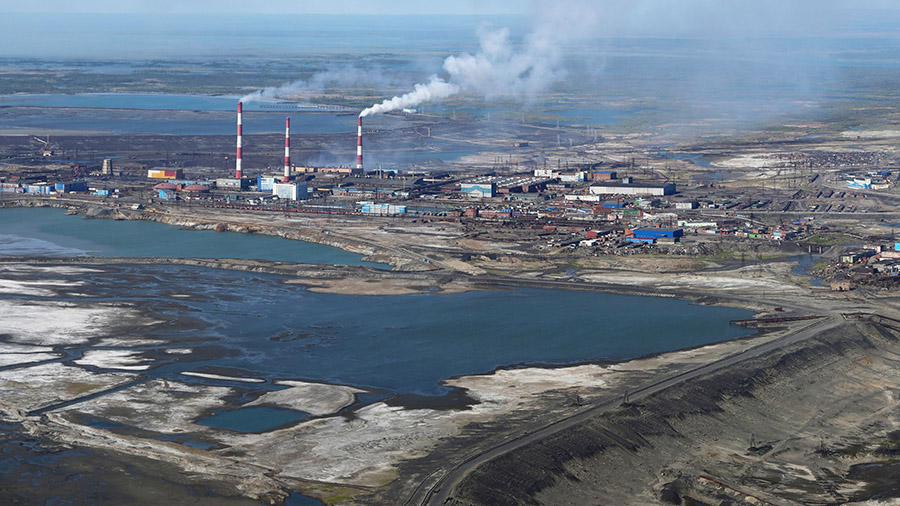
The Norilsk site exemplifies an area of especially high risk due to heterogeneous geocryological conditions. Ground temperature and composition vary across the site, so visually identical buildings may have very different stability. The main conclusion is clear: permafrost does not tolerate one-size-fits-all solutions; it requires precise diagnosis at a specific location and moment in time.
Stages of creating the geotechnical monitoring system
To adapt existing infrastructure to climate change and reduce accident risk, Nornickel developed a two-loop monitoring system for buildings and structures plus geotechnical and background monitoring of perennially frozen soils. The first loop covers individual assets; the second tracks natural background conditions and long-term permafrost dynamics. Together they provide a unified picture of climatic and engineering risks. This approach is based on the best Russian and international practice adapted to the Far North.
Key stages in building the permafrost monitoring system:
- Restoring a network of observational temperature monitoring boreholes.
- Inspecting foundations and structural elements.
- Equipping assets with automated measurement instruments.
- Aggregating data into a single information-diagnostic system.
- Developing mathematical forecasting methods to assess infrastructure stability under different climate and anthropogenic scenarios.
- Establishing, together with ZGU, a regional background permafrost monitoring system.
The program was implemented in stages. First, the company carried out extensive drilling and restored the network of observation temperature boreholes: over 500 boreholes were drilled.
Next came comprehensive surveys of foundations and structures: specialists recorded defects, identified deviations from design parameters and updated site-specific geotechnical monitoring programs.
After that, design, construction and commissioning works were completed to equip sites with automated measurement systems, whose data feed into a single IT platform — the information-diagnostic system (IDS). Today the IDS contains data on more than 1,000 assets, and information from 214 of them is received automatically.
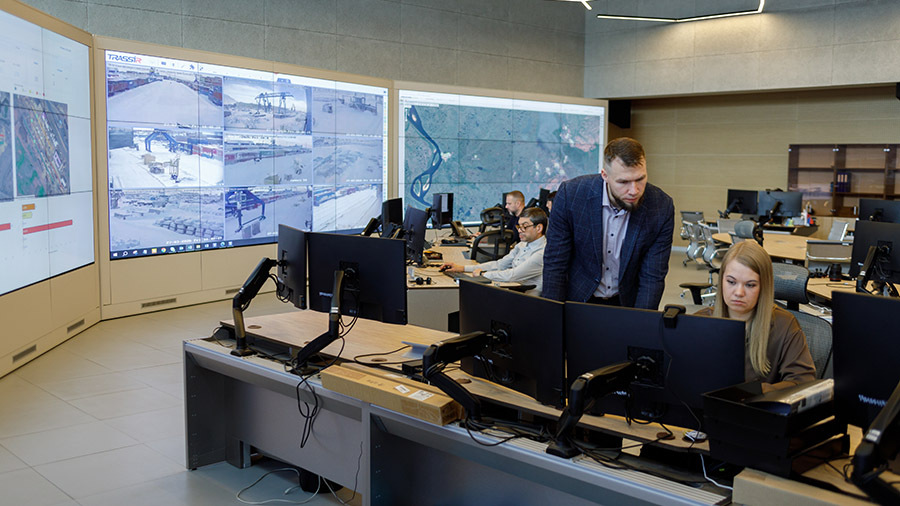
At the next stage, Nornickel implemented a system for collecting, transmitting, storing, processing and analyzing data based on the IDS of its Polar Branch. This enabled specialists in the Buildings and Structures Monitoring Center to monitor asset safety in real time from a control room.
Next came comprehensive surveys of foundations and structures: specialists recorded defects, identified deviations from design parameters and updated site-specific geotechnical monitoring programs.
After that, design, construction and commissioning works were completed to equip sites with automated measurement systems, whose data feed into a single IT platform — the information-diagnostic system (IDS). Today the IDS contains data on more than 1,000 assets, and information from 214 of them is received automatically.
At the next stage, Nornickel implemented a system for collecting, transmitting, storing, processing and analyzing data based on the IDS of its Polar Branch. This enabled specialists in the Buildings and Structures Monitoring Center to monitor asset safety in real time from a control room.
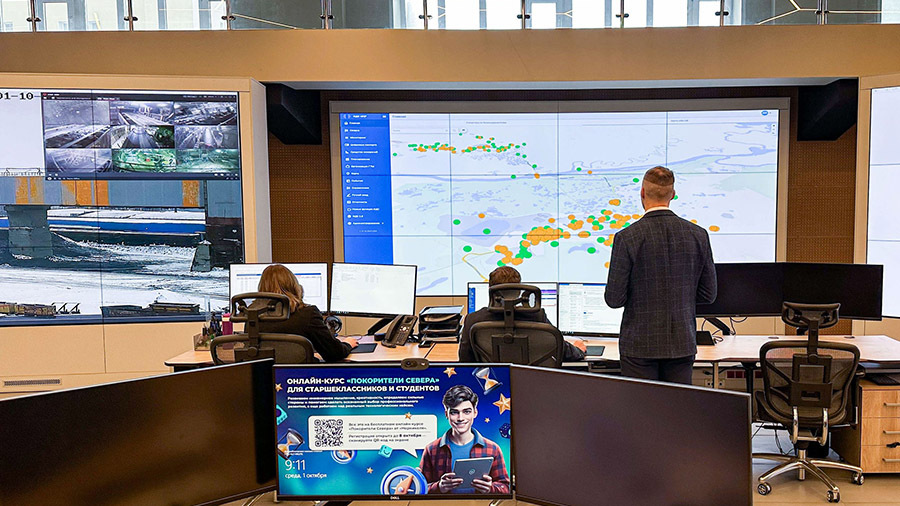
Of particular importance is that the IDS stores all asset-related information. The system accumulates key technical documentation: engineering survey materials, design solutions, inspection and observation results, industrial safety expert reports and internal documents. This data mass transforms the monitoring from a dispersed sensor network into a fully fledged analytical base for assessing infrastructure condition and making management decisions.
Based on engineering surveys and geotechnical monitoring, mathematical models of thermal and mechanical interactions between engineering structures and perennially frozen soils were created. These calculations confirmed that geotechnical monitoring is needed not only for operational control but also as a basis for long-term forecasting of asset behavior under changing climatic conditions.
A separate effort in 2023–2025, carried out with the Zapolyarny State University (ZGU), established a regional background permafrost monitoring system.
Using archival data, reconnaissance visits and background observations, specialists compiled a landscape map from the Norilsk industrial district to Dudinka. They also performed mathematical modelling to estimate ground temperatures for 2024 and projected changes to 2050 under the SSP5-8.5 climate scenario for Krasnoyarsk Krai.
Based on engineering surveys and geotechnical monitoring, mathematical models of thermal and mechanical interactions between engineering structures and perennially frozen soils were created. These calculations confirmed that geotechnical monitoring is needed not only for operational control but also as a basis for long-term forecasting of asset behavior under changing climatic conditions.
A separate effort in 2023–2025, carried out with the Zapolyarny State University (ZGU), established a regional background permafrost monitoring system.
Using archival data, reconnaissance visits and background observations, specialists compiled a landscape map from the Norilsk industrial district to Dudinka. They also performed mathematical modelling to estimate ground temperatures for 2024 and projected changes to 2050 under the SSP5-8.5 climate scenario for Krasnoyarsk Krai.
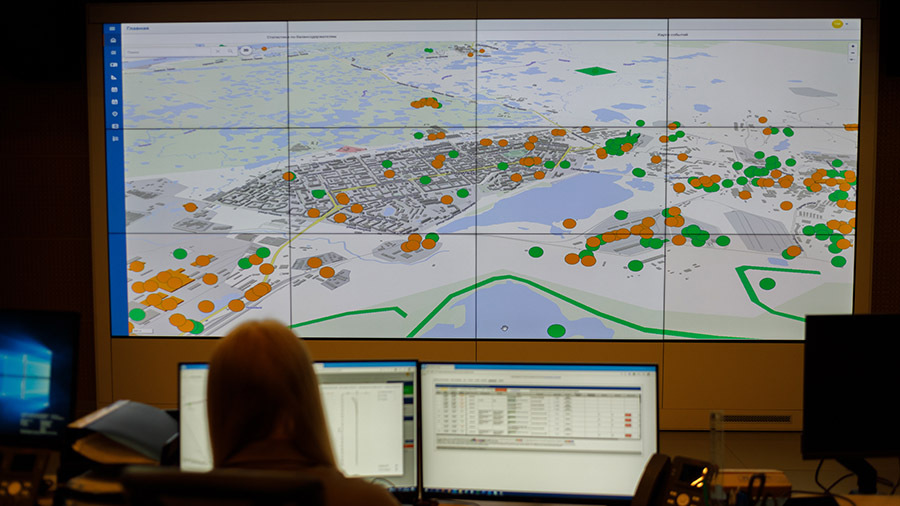
Nornickel’s experience in creating and operating such an integrated automated monitoring system demonstrates the importance of linking sensors, a digital platform and modelling for Arctic infrastructure resilience. It is not merely an observational tool but a technological foundation for proactive lifecycle management, assessing climate impacts on infrastructure and managing risks over the long term.
From observation to management
A major strength of this approach is that monitoring is not left “on the shelf” as reporting data. The collected information triggers a management cycle: condition assessment, interpretation, decision-making, corrective action and repeat verification. This is the shift from a reactive to a proactive model.
If the system indicates rising temperatures, anomalies in structural behavior or signs of thawing, the company can preemptively revise operating regimes, plan structural reinforcements, carry out additional inspections or adjust design solutions. For capital-intensive industries, delayed reaction is always costlier than monitoring and prevention. Thus geotechnical monitoring in the Arctic is not a peripheral function but part of overall infrastructure resilience management.
If the system indicates rising temperatures, anomalies in structural behavior or signs of thawing, the company can preemptively revise operating regimes, plan structural reinforcements, carry out additional inspections or adjust design solutions. For capital-intensive industries, delayed reaction is always costlier than monitoring and prevention. Thus geotechnical monitoring in the Arctic is not a peripheral function but part of overall infrastructure resilience management.
What monitoring delivers
- Early detection of deformations.
- Reduced risk of accidents and downtime.
- Repair planning based on actual technical condition.
- Extended service life of infrastructure.
- Lower environmental and social risks.
Automated tailings storage monitoring
One of the most illustrative solutions was the automation of tailings storage control. Tailings facilities store waste from ore processing.
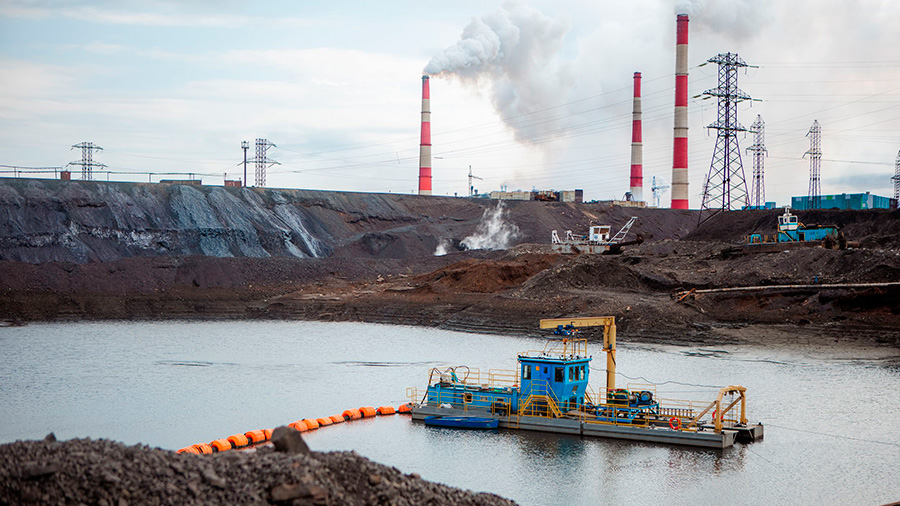
In the Norilsk industrial district, Nornickel deployed automated diagnostic control systems at the tailings facilities of the Norilsk and Talnakh concentrator plants, with plans to roll out the solution to other sites. Hydrotechnical facilities are especially critical because they affect both operational safety and environmental risk.
In the Norilsk industrial district, Nornickel deployed automated diagnostic control systems at the tailings facilities of the Norilsk and Talnakh concentrator plants, with plans to roll out the solution to other sites. Hydrotechnical facilities are especially critical because they affect both operational safety and environmental risk.
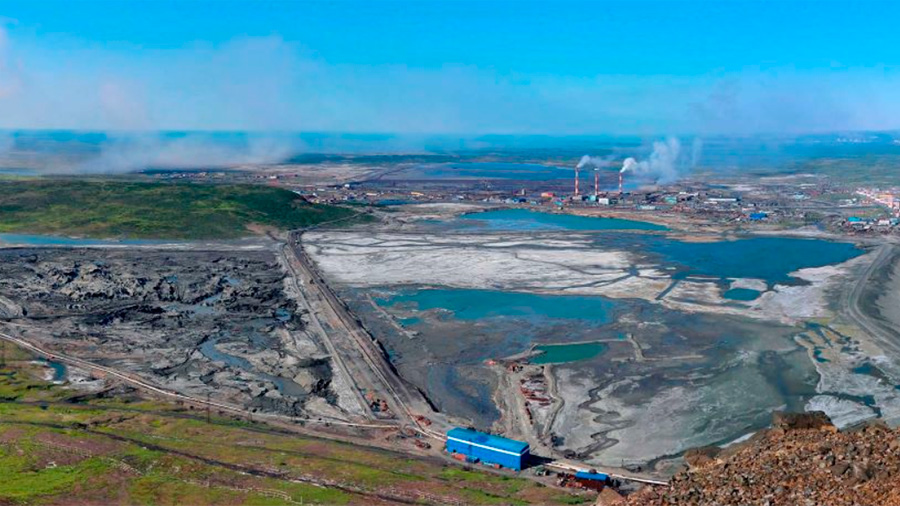
More than 400 sensors transmit real-time data on ground temperature, groundwater level, wind load, precipitation and other parameters characterizing facility condition.
Data transmission is adapted to northern conditions and uses wireless technologies instead of cables. Measurement frequency and sensor polling intervals can be adjusted to operational needs, which is especially valuable during snowmelt and flood periods when dynamics accelerate. This format allows continuous digital focus on the asset rather than mere observation.
All data are integrated into the company’s unified information-diagnostic system.
Data transmission is adapted to northern conditions and uses wireless technologies instead of cables. Measurement frequency and sensor polling intervals can be adjusted to operational needs, which is especially valuable during snowmelt and flood periods when dynamics accelerate. This format allows continuous digital focus on the asset rather than mere observation.
All data are integrated into the company’s unified information-diagnostic system.
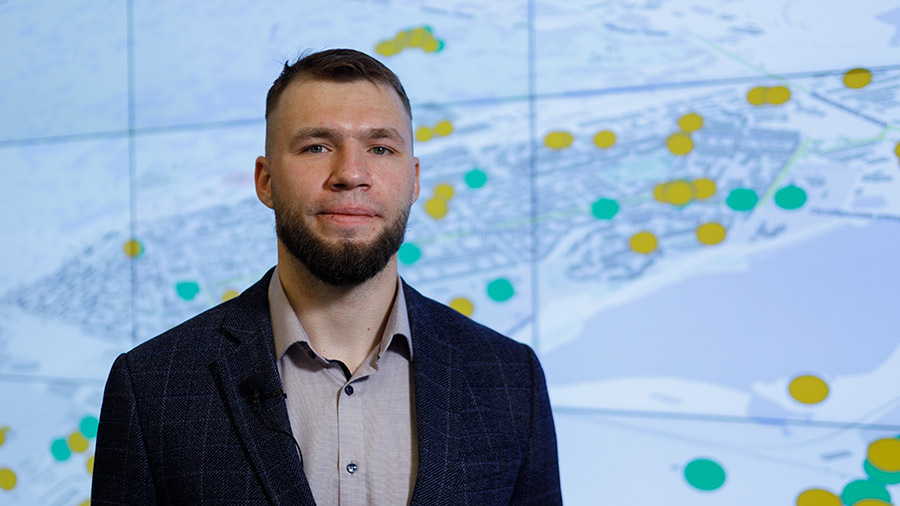
Bogdan Samokoz,
Head of Monitoring and Diagnostics Processes Support and Development, Nornickel Polar Branch:
“The system greatly reduces human labor and, most importantly, enables quicker development of corrective measures and actions to ensure safe tailings operation. We control the parameters necessary for safe operation in real time. Previously all information was collected manually, including requests to authorities.”
The company is building a unified risk-management infrastructure rather than isolated “smart” sites. As a result, labour costs fall, reaction times shorten and corrective decisions become more precise.
Tailings in numbers
- Two facilities are equipped with automated control.
- More than 400 sensors installed.
- Company-owned automatic meteorological stations.
- Data received in real time.
- Measurement intervals vary from 15 minutes to 24 hours.
Working ahead: ground thermostabilization at GRS-2 and the “Smart Roof” project
Another significant example is the solution implemented by Norilsktransgaz at GRS-2. Beneath the gas reduction shop, specialists found partial thawing of soils down to 12 meters. This caused uneven settlement and reduced bearing capacity. To prevent structural failure, ground thermostabilization was performed.
The system operates by natural circulation of a refrigerant: in winter it accumulates natural cold. This solution is especially valuable in the Far North where autonomy and efficiency matter. The complex has a projected service life of up to 50 years, making it a long-term engineering response to climate and engineering risks.
The system operates by natural circulation of a refrigerant: in winter it accumulates natural cold. This solution is especially valuable in the Far North where autonomy and efficiency matter. The complex has a projected service life of up to 50 years, making it a long-term engineering response to climate and engineering risks.
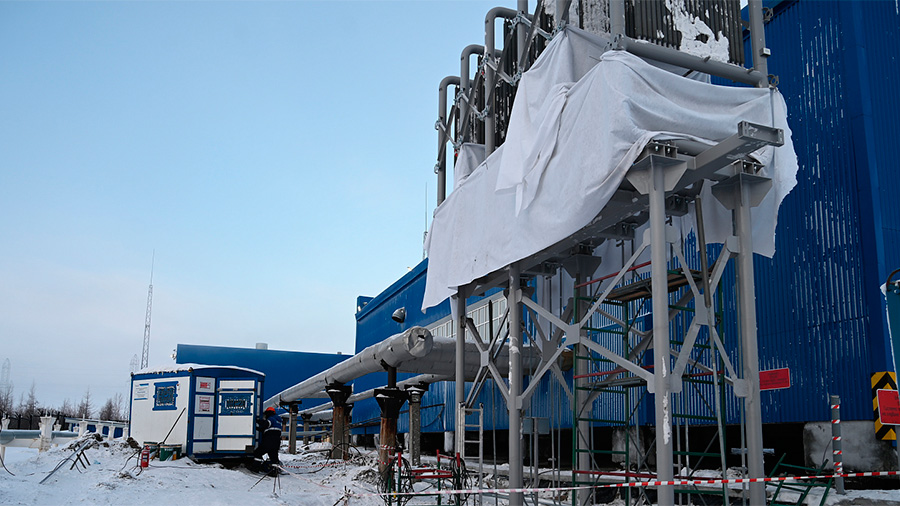
At the same time, Norilsktransremont is testing the “Smart Roof” project — a 24/7 remote monitoring system for snow load. The system was installed on the roof of a rolling stock maintenance workshop. It automatically tracks load changes and enables timely decisions to remove snow. In Arctic conditions this is critical: snow loads can accumulate quickly, and visual checks do not always permit timely risk assessment.
The system comprises snow-load sensors, a weighing platform and wireless data transmission via Wi‑Fi. As a result, information arrives quickly and independent of the human factor. The maximum snow load per square metre is 120 kg. When the threshold of 100 kg is reached, responsible personnel receive SMS and email alerts, and the event is recorded in the database.
This approach improves operational reliability, reduces incidents, minimises human error and allows data-driven decisions rather than responses to already occurred problems.
The system comprises snow-load sensors, a weighing platform and wireless data transmission via Wi‑Fi. As a result, information arrives quickly and independent of the human factor. The maximum snow load per square metre is 120 kg. When the threshold of 100 kg is reached, responsible personnel receive SMS and email alerts, and the event is recorded in the database.
This approach improves operational reliability, reduces incidents, minimises human error and allows data-driven decisions rather than responses to already occurred problems.
Science as part of engineering protection
The systemic effect of Nornickel’s innovation stems from close cooperation with scientific and educational centres. The main regional scientific partner is ZGU named after N. M. Fedorovsky. Together with the university, Nornickel developed a regional background monitoring system for perennially frozen soils from the Norilsk industrial district to Dudinka.
The company is also expanding cooperation with other universities. For example, jointly with Lomonosov Moscow State University, Nornickel plans major scientific expeditions in the Arctic. In February 2026 an agreement was signed to launch new research. Scientists will address a wide range of tasks: climate change, permafrost state and dynamics, carbon footprint monitoring and biodiversity studies across the Polar region.
The collaboration format foresees not only research but also expert support for projects and information exchange between institutions. These studies are important not only for Nornickel’s development but for Russia as a whole, since one third of the country’s territory lies in the Arctic zone.
The science–business link enables the company to assess permafrost degradation, run numerical models and select adaptation measures in advance. Consequently, monitoring ceases to be mere observation and becomes an instrument of long-term climate-risk management.
The company is also expanding cooperation with other universities. For example, jointly with Lomonosov Moscow State University, Nornickel plans major scientific expeditions in the Arctic. In February 2026 an agreement was signed to launch new research. Scientists will address a wide range of tasks: climate change, permafrost state and dynamics, carbon footprint monitoring and biodiversity studies across the Polar region.
The collaboration format foresees not only research but also expert support for projects and information exchange between institutions. These studies are important not only for Nornickel’s development but for Russia as a whole, since one third of the country’s territory lies in the Arctic zone.
The science–business link enables the company to assess permafrost degradation, run numerical models and select adaptation measures in advance. Consequently, monitoring ceases to be mere observation and becomes an instrument of long-term climate-risk management.
The geotechnical monitoring system achieves several significant sustainability effects. First, it reduces the likelihood of accidents and environmental damage because emphasis is on preventive risk avoidance, not aftermath remediation. Second, workplace safety improves: personnel spend less time operating in hazardous zones and more time in controlled management regimes. Third, managerial discipline is strengthened since decisions are data-driven rather than intuitive.
Importantly, such projects extend infrastructure service lifetimes. This reduces the need for new capital investments and makes the production system more resilient over the long term. For these reasons, Nornickel’s experience can be seen as a practical model for adapting Arctic industry to a climate-changed future.
Scaling the geotechnical monitoring model to other Arctic enterprises requires an individual approach. Experts stress that asset-management methods on permafrost cannot be universalised even within the Norilsk industrial district, let alone across the entire Far North.
Each site requires tailored solutions that account for geocryological, engineering-geological and structural characteristics. Some sites are dominated by ice-rich soils; others by talik zones; temperatures, operational histories, technological processes and structural conditions differ. Identical design choices can therefore produce opposite outcomes.
Importantly, such projects extend infrastructure service lifetimes. This reduces the need for new capital investments and makes the production system more resilient over the long term. For these reasons, Nornickel’s experience can be seen as a practical model for adapting Arctic industry to a climate-changed future.
Scaling the geotechnical monitoring model to other Arctic enterprises requires an individual approach. Experts stress that asset-management methods on permafrost cannot be universalised even within the Norilsk industrial district, let alone across the entire Far North.
Each site requires tailored solutions that account for geocryological, engineering-geological and structural characteristics. Some sites are dominated by ice-rich soils; others by talik zones; temperatures, operational histories, technological processes and structural conditions differ. Identical design choices can therefore produce opposite outcomes.
Pavel Kotov, Director of the Research Centre, Zapolyarny State University named after N. M. Fedorovsky:
“An optimal strategy should rely on systematic geotechnical monitoring: observations of ground temperature, structural deformations, snow accumulation and drainage, together with numerical modelling of thermal and mechanical interactions between perennially frozen soils and infrastructure under projected warming. This enables a realistic assessment of asset condition and construction of mathematical models to choose optimal design solutions (or combinations of solutions) that actually stabilise the ground beneath a particular structure.
Pilot industrial tests of technologies are particularly important: cooling systems, injection compounds and new foundation types. Pilot implementations with detailed monitoring make it possible to validate calculation models, refine system parameters under Norilsk’s real conditions and only then scale an approach to residential and industrial development. Without staged verification, even technologically advanced solutions remain risky for mass application in complex permafrost settings.”
The main conclusion is simple: in the Arctic you cannot build relying only on past operational experience. Climate is changing faster, and anthropogenic activity tied to strategic plans for Arctic development in the Russian Federation is rising year by year. Companies therefore need monitoring, forecasting and readiness to act proactively by putting assets under digital control. Nornickel demonstrates that technological maturity, scientific backing and managerial discipline together create real protection for infrastructure operating under climate pressure.
Geotechnical monitoring amid permafrost degradation is not simply ground-condition control; it is a new managerial logic for Arctic industry.
Geotechnical monitoring amid permafrost degradation is not simply ground-condition control; it is a new managerial logic for Arctic industry.
Photo: Nornickel Photo Bank