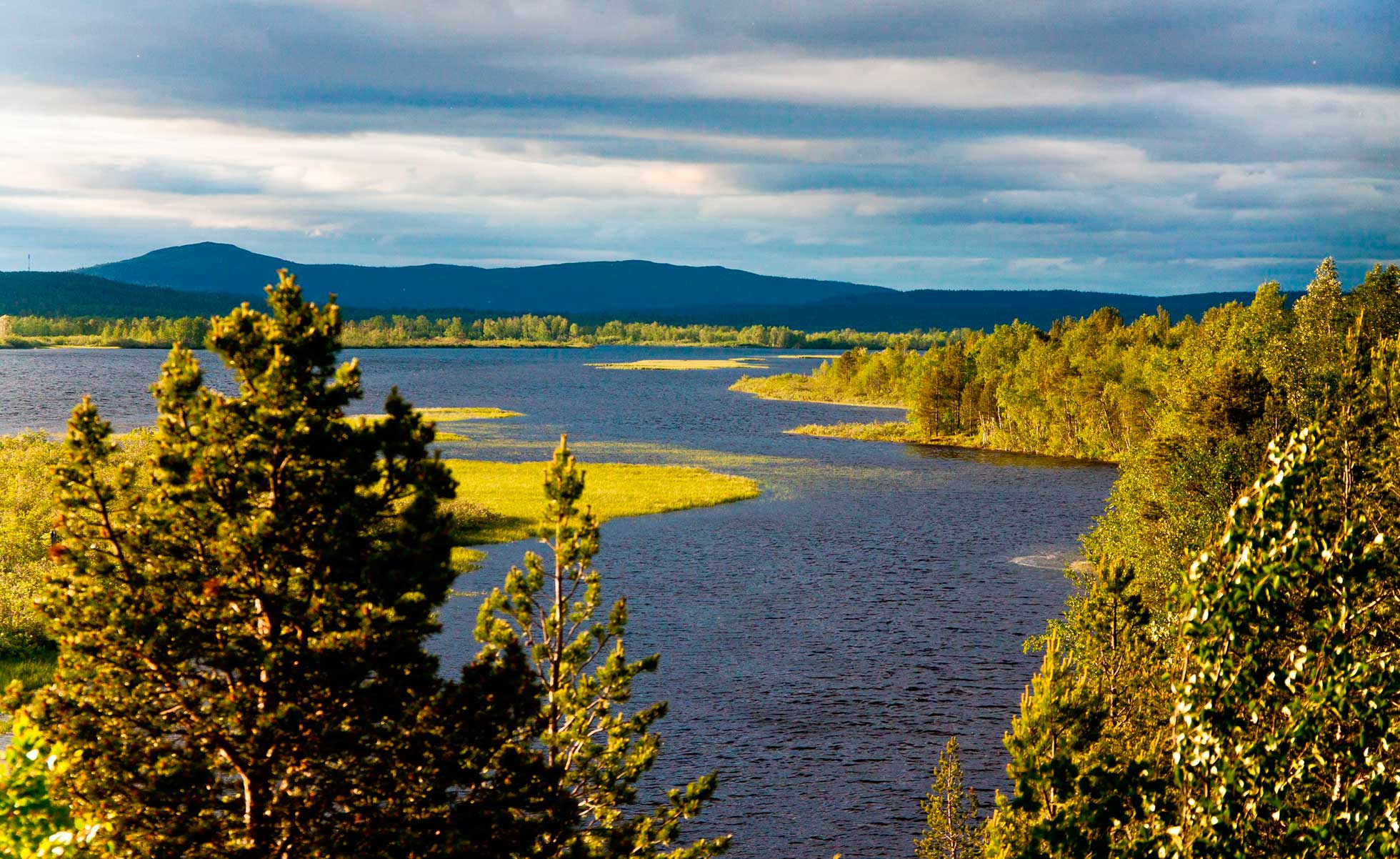
The Arctic Dossier, covering Nornickel's role in environmental protection as a special feature, was presented in Moscow.
The world's first comprehensive review describes the contributions of the government, environmental organizations, scientific community and the business world to the ecology of the Far North. It has been prepared within the framework of the UN Decade on Ecosystem Restoration, a global initiative from 2021 to 2030 that aims to prevent and halt degradation and fully restore natural terrain around the world.
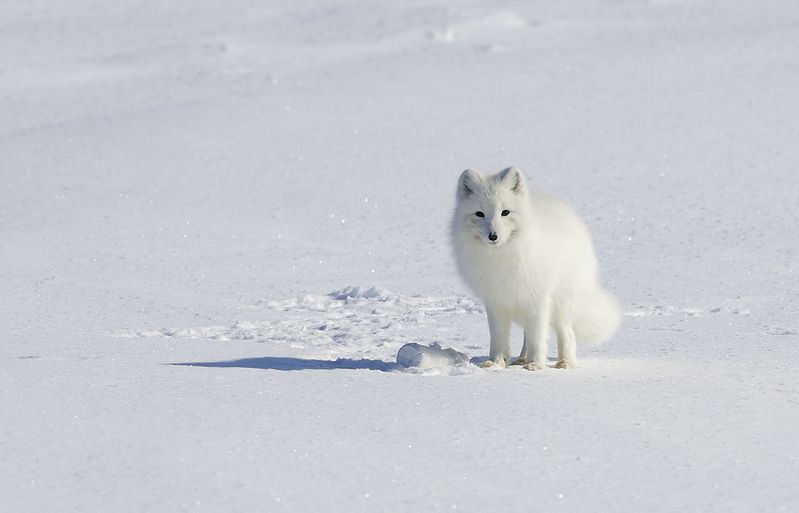
The Arctic: driving the global weather
The 140-page dossier is a structured compilation of measures to restore Arctic ecosystems over the next 15 years. In 2010, during his visit to the Franz Josef Land, Vladimir Putin saw the consequences of Soviet era economic activity in the Far North for the first time. He issued instructions for a full-scale cleanup of the Arctic, so the dossier is basically a report on the work that has been performed.
All the data in the dossier has been validated and verified by scientists and professionals. The Russian or international public have never been presented with a more complete overview of the deliverables from the government, corporate, and volunteer environmental programs.
Russia's approach to ecosystem restoration is built on partnerships. The programs involve federal and regional government agencies, municipal authorities, the scientific community, businesses, public organizations, volunteers and indigenous small-numbered peoples of the North to enable the development of a uniform action strategy that supports long-term results.
The dossier will be presented on 8-12 December 2025 in Nairobi, Kenya, during the seventh session of the United Nations Environment Assembly (UNEA-7). The Russian experience will most certainly be useful for other countries.
All the data in the dossier has been validated and verified by scientists and professionals. The Russian or international public have never been presented with a more complete overview of the deliverables from the government, corporate, and volunteer environmental programs.
Russia's approach to ecosystem restoration is built on partnerships. The programs involve federal and regional government agencies, municipal authorities, the scientific community, businesses, public organizations, volunteers and indigenous small-numbered peoples of the North to enable the development of a uniform action strategy that supports long-term results.
The dossier will be presented on 8-12 December 2025 in Nairobi, Kenya, during the seventh session of the United Nations Environment Assembly (UNEA-7). The Russian experience will most certainly be useful for other countries.
Vadim Petrov,
Deputy Director of Ekologia All-Russian Research Institute Federal State Budgetary Institution (FGBU VNII Ekologia) and Official Secretary of the Russian National Committee for the UN Decade on Ecosystem Restoration:
"Russia's Arctic territory is the largest in the world which makes the country a global environmental donor as the Arctic has implications for earth's weather. The freezing of Niagara Falls or heavy snowfalls in lower latitudes are driven by the Arctic. This means that we are especially accountable and eager to demonstrate our success.
The dossier was prepared under a Russian Government instruction from February 2025 which ratified a national strategy for Russia's representation at key global events. The document is of strategic importance, confirming Russia's commitment to fulfilling international environmental obligations at all levels: federal, regional, and business, and demonstrating a broad spectrum of interdepartmental, intersectoral, and international cooperation.
The Arctic Dossier is based on evidence from government monitoring, statistics, regional and business reporting supported by public consultation and discussions. The outcomes achieved and measures already completed place Russia among the leaders of the UN Decade on Ecosystem Restoration and sustainable development in general".
Nothing but science
While working on the dossier, the authors used standardized approaches developed within the UN Decade, evaluated annual reports from other countries, and relied on best practices for information disclosure and verification.
The most important of the 10 principles proposed by the UN to underpin ecosystem restoration is continuum, a wide range of ongoing and interconnected actions from conservation to full ecological restoration. A simple 'repair' of the degraded site is not enough; it is necessary to preserve intact ecosystems, restore species, implement sustainable resource management, and plant forests. Successful restoration is more than isolated projects; it is a science-based transformation of human relationships with nature.
The most important of the 10 principles proposed by the UN to underpin ecosystem restoration is continuum, a wide range of ongoing and interconnected actions from conservation to full ecological restoration. A simple 'repair' of the degraded site is not enough; it is necessary to preserve intact ecosystems, restore species, implement sustainable resource management, and plant forests. Successful restoration is more than isolated projects; it is a science-based transformation of human relationships with nature.
The UN states that ecosystem restoration can address nearly one-third of the climate change challenge. Every dollar invested in restoration creates up to 30 dollars in economic benefits, such as better quality of life, soil fertility and technological progress.
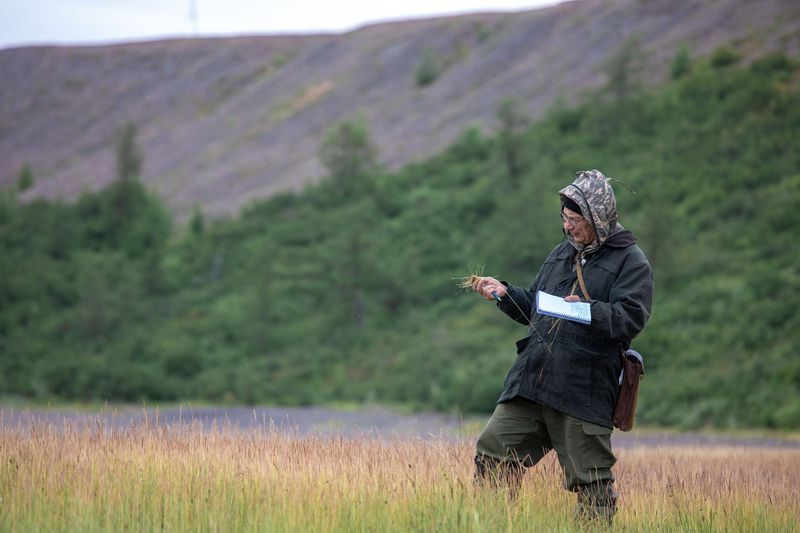
Scientific collaborations help find new restoration methods. By partnering with the Russian Academy of Sciences and leading universities, including several stages of the Great Scientific Expedition, Nornickel is able to not only restore its own Arctic territories but also to contribute valuable inputs to global science. In particular, following the expedition, an Integral Indicator of Ecosystem Health (IIEH) was proposed for rapid and effective assessment of changes in the biosphere.
Government and business
Government measures to restore Arctic ecosystems are being implemented to accord with the Environmental Protection program, and national goal of environmental well-being, Biodiversity Conservation and Development of Ecotourism, General Cleanup, and Circular Economy federal projects.
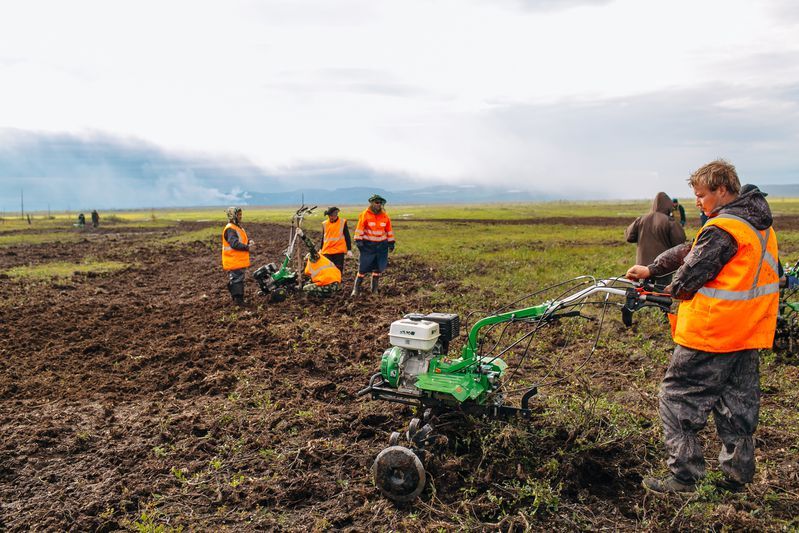
The Arctic Dossier contains detailed disclosures on the deliverables of these programs. By 2024, 6,135 hectares of disturbed lands had been remediated in the Arctic. The Russian Ministry of Natural Resources and Ministry of Defense removed more than 500,000 tons of waste from an area of over 395 hectares on the Novaya Zemlya and Franz Josef Land archipelagos. On Wrangel Island, military staff cleared demolished buildings and removed 3,800 tons of scrap metal. These territories are now home for national parks and nature reserves.
The Arctic Dossier contains detailed disclosures on the deliverables of these programs. By 2024, 6,135 hectares of disturbed lands had been remediated in the Arctic. The Russian Ministry of Natural Resources and Ministry of Defense removed more than 500,000 tons of waste from an area of over 395 hectares on the Novaya Zemlya and Franz Josef Land archipelagos. On Wrangel Island, military staff cleared demolished buildings and removed 3,800 tons of scrap metal. These territories are now home for national parks and nature reserves.
Specially protected natural areas (SPNAs) of federal significance are the subject of special attention in Russia. In the Far North, there are 40 SPNAs covering an area of 39 million hectares and ensuring the largest shield for the Arctic ecosystem. Nature reserves and national parks are the setting for baseline monitoring parameters and reference sites to pilot run sustainable use of natural resources. More than 20 scientific programs were organized in the SPNAs over 2023-2024.
According to observation findings, mining and construction are the primary source of damage to Arctic lands. Russian industrial companies understand their responsibility for environmental conservation and actively invest in ecosystem restoration.
Nornickel is the absolute leader in sustainable development which is confirmed by independent ratings. The Arctic Dossier indicates that the company runs a 2035 Climate Change Strategy and effectively manages its environmental impact. Toward the goals set, the company has developed programs and more than 300 actions.
Most importantly, Nornickel was Russia's first enterprise to design a target operational model for ecosystem restoration in line with the UN Decade principles. The company addresses the whole restoration cycle, from damage prevention to ecosystem restoration, to deliver quantifiable results supported by scientific data and audits.
This model brings together the government, researchers, business and indigenous peoples with local communities. For the first time, an industrial company has declared its intent to not only mitigate negative impacts, but also to achieve zero net damage and nature positive outcomes.
Nornickel is the absolute leader in sustainable development which is confirmed by independent ratings. The Arctic Dossier indicates that the company runs a 2035 Climate Change Strategy and effectively manages its environmental impact. Toward the goals set, the company has developed programs and more than 300 actions.
Most importantly, Nornickel was Russia's first enterprise to design a target operational model for ecosystem restoration in line with the UN Decade principles. The company addresses the whole restoration cycle, from damage prevention to ecosystem restoration, to deliver quantifiable results supported by scientific data and audits.
This model brings together the government, researchers, business and indigenous peoples with local communities. For the first time, an industrial company has declared its intent to not only mitigate negative impacts, but also to achieve zero net damage and nature positive outcomes.
VADIM PETROV:
"The target operational model is essential to the business. It is a clear statement of methods and procedures to implement the corporate strategy, defining the level of business process integration and standardization, and seeking to bridge the gap between strategy and daily operations. It is the first ever global business example when a target operational model has been designed for ecosystem development. And the ground breaker is Nornickel, Russia's industrial titan, operating in extreme conditions associated with various performance challenges. Nornickel has managed to drive and initiate massive transformations in ecosystem restoration.
Nornickel has created and piloted a scientifically verified model with measurable qualitative and quantitative targets that can be achieved by 2035. No other company in the Arctic zone has a model like this. And, of course, it requires a thorough study and further rollout".
Photos by Nornickel
November, 2025
November, 2025