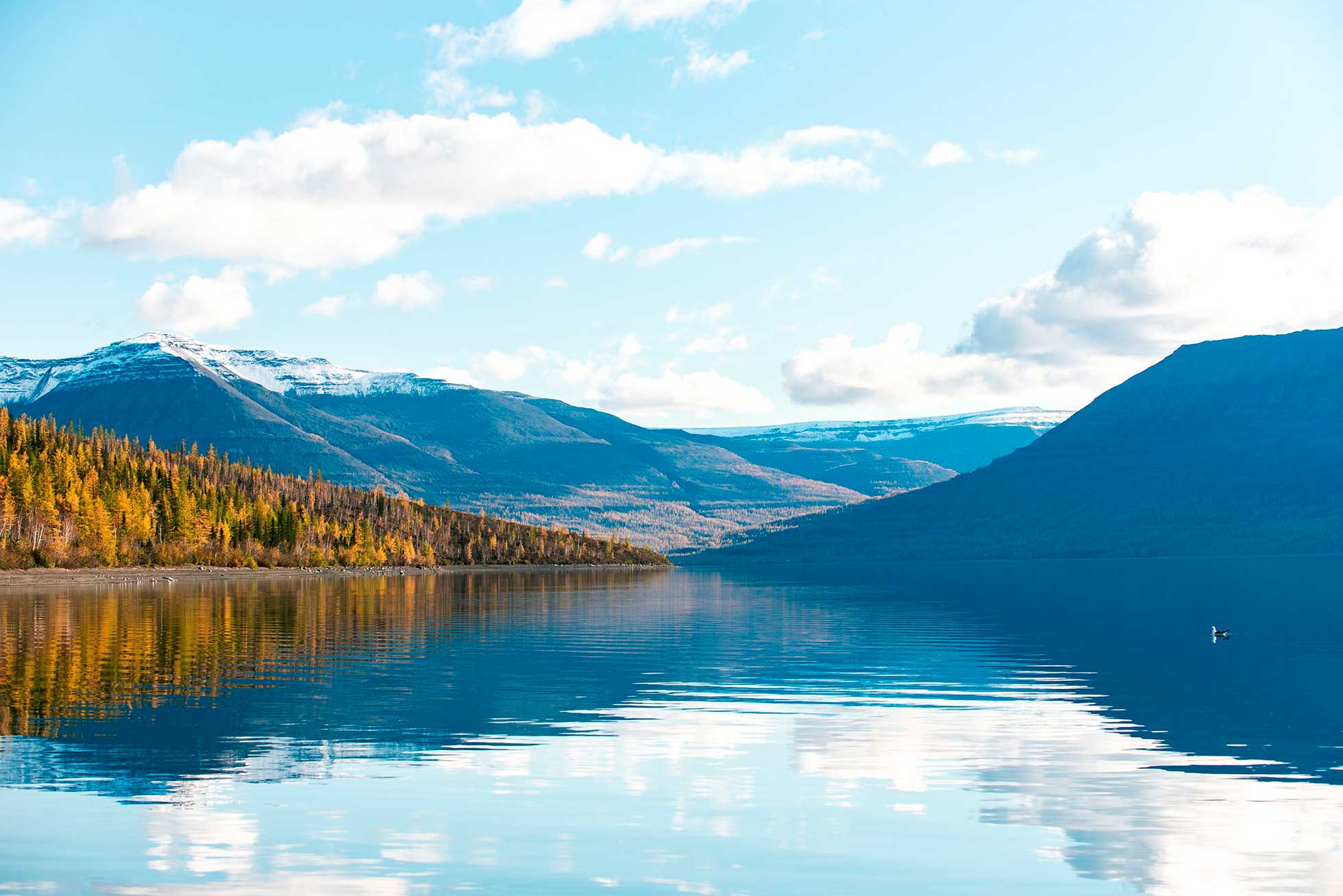
Photos by Nornickel
Permafrost thawing is critical for understanding the earth's climate future. That is why permafrost studies attract a global community of scientists.
In September 2025, the first Russian-Chinese scientific expedition took place in the vicinity of Norilsk and Dudinka, at the initiative of the Polar State University and with the support of Nornickel. Researchers have collected vast amounts of data to support accurate modeling for climate change forecasting on a global scale.
Permafrost under control
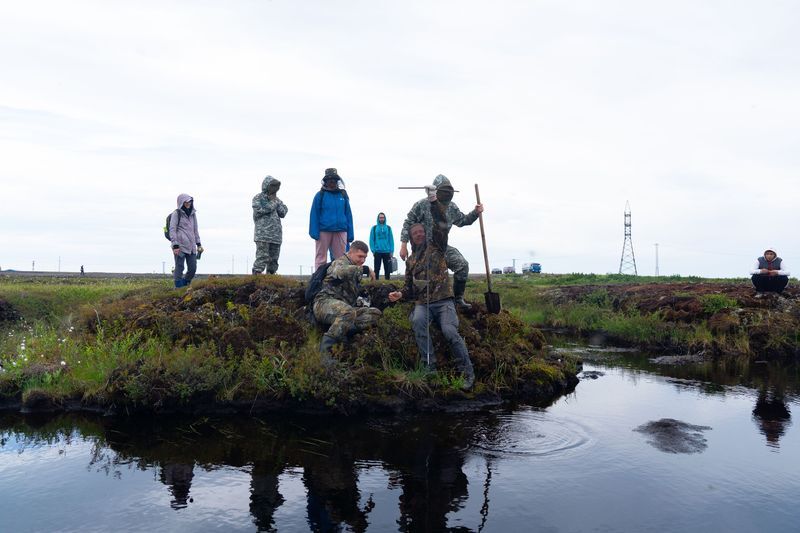
The Polar State University has been monitoring permafrost for a long time on its own 80-square-kilometer site with 23 boreholes drilled to the depth of 20 - 200 meters. Each borehole is equipped with sensors and devices to transmit data.
Last year, a research fellow from the Chinese research institute participated in the permafrost field camp for the first time. Ten days of work with the Russian team left an indelible impression on him.
This year's delegation to Norilsk has been solidified by scientists from the Guangzhou Institute of Geochemistry of the Chinese Academy of Sciences, Second Institute of Oceanography (SIO) of the Ministry of Natural Resources, and Shenzhen MSU–BIT University (Russian-Chinese cooperative university established in 2014 upon the agreement between the Moscow State University and Beijing Institute of Technology).
There were many candidates wishing to take part in the first Russian-Chinese expedition to the Arctic: Yury Mazei, deputy rector for international affairs at the Lomonosov Moscow State University (MSU), has reviewed more than 30 applications. The main eligibility criteria included significant scientific potential, availability of in-house laboratory and research expertise.
The Russian Arctic has long been of interest to our eastern neighbors, in a variety of aspects. But the goal of this expedition is to uncover the distant past of the Trans-Baikal ecosystem and track the climate driven evolution of permafrost over hundreds of thousands of years.
A crucial role in supporting the Russian-Chinese expedition was played by Nornickel, which organized the entry of Chinese citizens to Russia, provided assistance with travel, logistics and permits to transport the collected samples across the border.
Last year, a research fellow from the Chinese research institute participated in the permafrost field camp for the first time. Ten days of work with the Russian team left an indelible impression on him.
This year's delegation to Norilsk has been solidified by scientists from the Guangzhou Institute of Geochemistry of the Chinese Academy of Sciences, Second Institute of Oceanography (SIO) of the Ministry of Natural Resources, and Shenzhen MSU–BIT University (Russian-Chinese cooperative university established in 2014 upon the agreement between the Moscow State University and Beijing Institute of Technology).
There were many candidates wishing to take part in the first Russian-Chinese expedition to the Arctic: Yury Mazei, deputy rector for international affairs at the Lomonosov Moscow State University (MSU), has reviewed more than 30 applications. The main eligibility criteria included significant scientific potential, availability of in-house laboratory and research expertise.
The Russian Arctic has long been of interest to our eastern neighbors, in a variety of aspects. But the goal of this expedition is to uncover the distant past of the Trans-Baikal ecosystem and track the climate driven evolution of permafrost over hundreds of thousands of years.
A crucial role in supporting the Russian-Chinese expedition was played by Nornickel, which organized the entry of Chinese citizens to Russia, provided assistance with travel, logistics and permits to transport the collected samples across the border.
Theory underpinned by practice
The starting point of the expedition was the Krasnye Kamni ('Red Rocks') gorge near Norilsk. The Chinese scientists investigated basalt formations and their iron content which gives the gorges their bright color. Modern techniques allow for a fairly accurate age measurement of formations. It takes 50,000 years for the carbon C-14 isotope to decay; its combinations with other isotopes in the samples will uncover the real history behind the 'red rocks'. In turn, the luminescence dating method will determine the past of organic and mineral deposits.
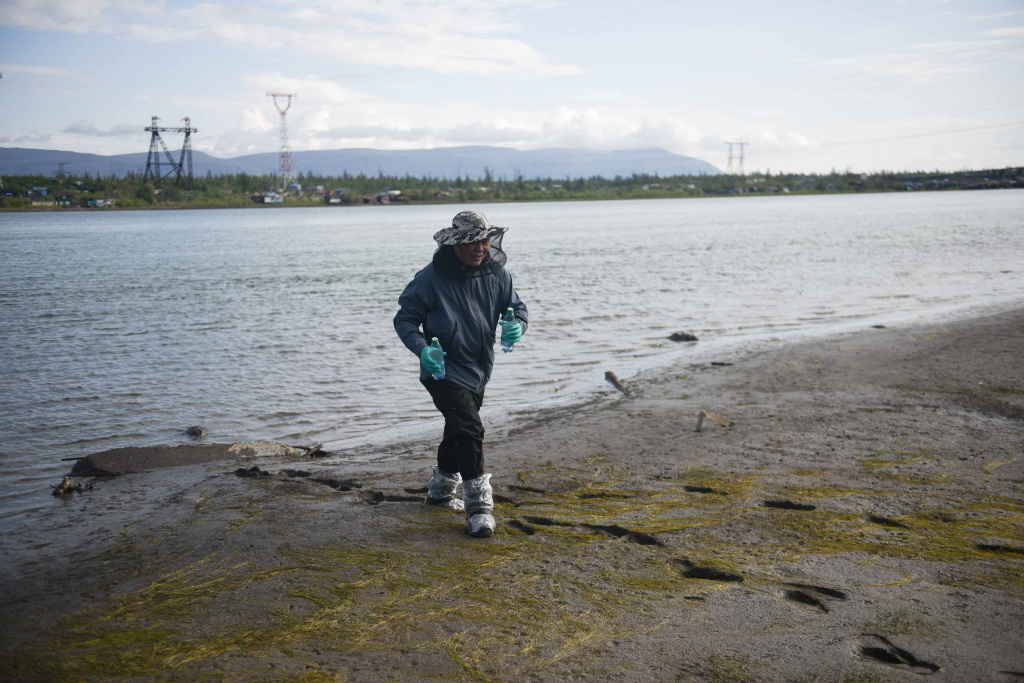
Academics of the Second Institute of Oceanography focused their research on the water bodies. They spent two days on the shore of Lama Lake and took water samples to study the effects of permafrost thawing and the post-thawing biogeochemical cycle of carbon and organic substances.
Academics of the Second Institute of Oceanography focused their research on the water bodies. They spent two days on the shore of Lama Lake and took water samples to study the effects of permafrost thawing and the post-thawing biogeochemical cycle of carbon and organic substances.
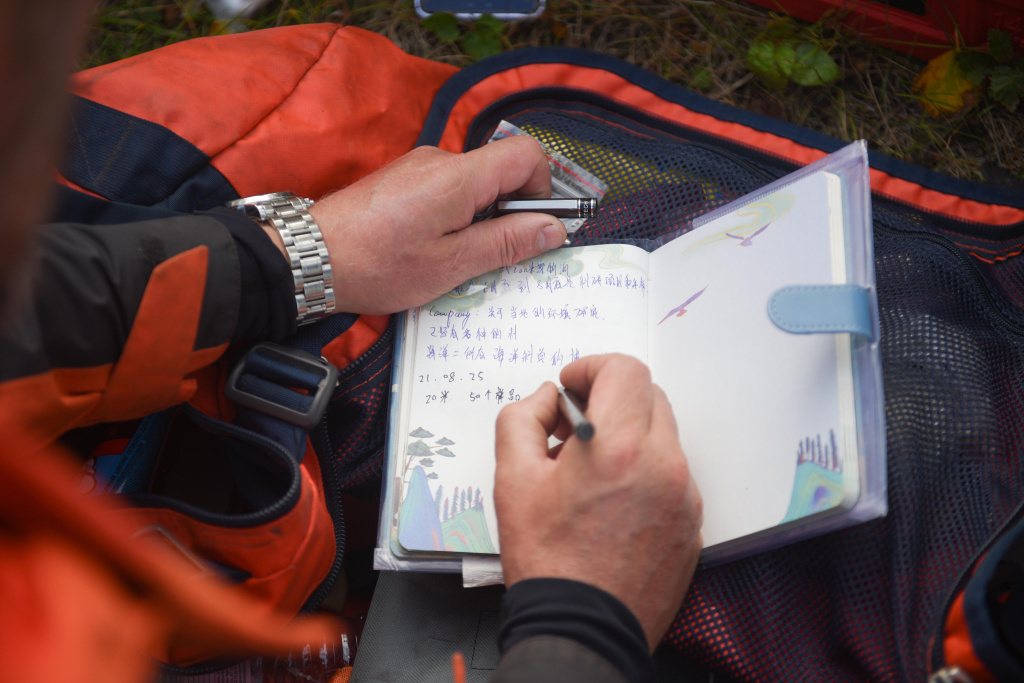
Over a total of 10 days, the Chinese team traveled to 13 locations to collect 40 samples of water, biological and geological material. All members of the expedition have been impressed by scientific potential and beauty of the Arctic and hospitality of its residents.
During the Trans-Baikal expedition, the Chinese team has gained invaluable practical experience. Even though Shenzhen is located in the tropics, the local university studies the Arctic geoecology. It is hard for students to visualize permafrost, which is why it is important for them to be taught by lecturers with hands-on experience. With the established relationships, the students themselves will soon have a chance to unlock the secrets of the Arctic’s unique nature.
Cooperation with China will continue. In addition to permafrost research, MSU in collaboration with Beijing National University, plans to set up an automated station in the Arctic to collect data on greenhouse gas dynamics in the atmosphere. Going forward, this station will be part of a network covering the entire country.
During the Trans-Baikal expedition, the Chinese team has gained invaluable practical experience. Even though Shenzhen is located in the tropics, the local university studies the Arctic geoecology. It is hard for students to visualize permafrost, which is why it is important for them to be taught by lecturers with hands-on experience. With the established relationships, the students themselves will soon have a chance to unlock the secrets of the Arctic’s unique nature.
Cooperation with China will continue. In addition to permafrost research, MSU in collaboration with Beijing National University, plans to set up an automated station in the Arctic to collect data on greenhouse gas dynamics in the atmosphere. Going forward, this station will be part of a network covering the entire country.
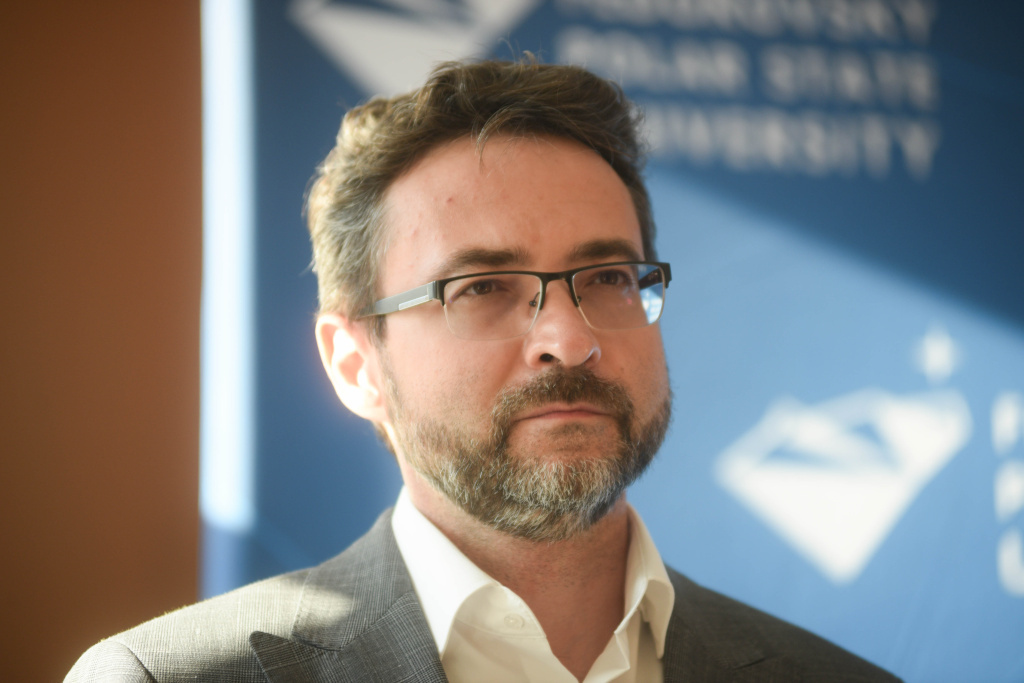
ARKADY VIKTOROVICH TARASEVICH,
deputy rector for research and international affairs at the Polar State University:
"At PSU, we are certain that the first Russian-Chinese expedition has been a major success. All collected samples will be analyzed, the results will be summarized and used in scientific articles and conference presentations. This will help promote the PSU among the international scientific community.
We want our students to participate in practical research and welcome scientific collaborations. China is ready to enroll master's and post-graduate students from Russia, engage them in international programs, contests and grant competitions, and finance joint research.
In turn, the Polar State University, with support from Nornickel and Our Norilsk foundation, is launching a project to build in-house laboratories. Soon, we will be able to perform all the tests of highest demand within research projects for subsoil users without having to transport the samples to the mainland. This will reinforce our scientific capabilities and significantly grow our resources for further research in Norilsk".
November, 2025