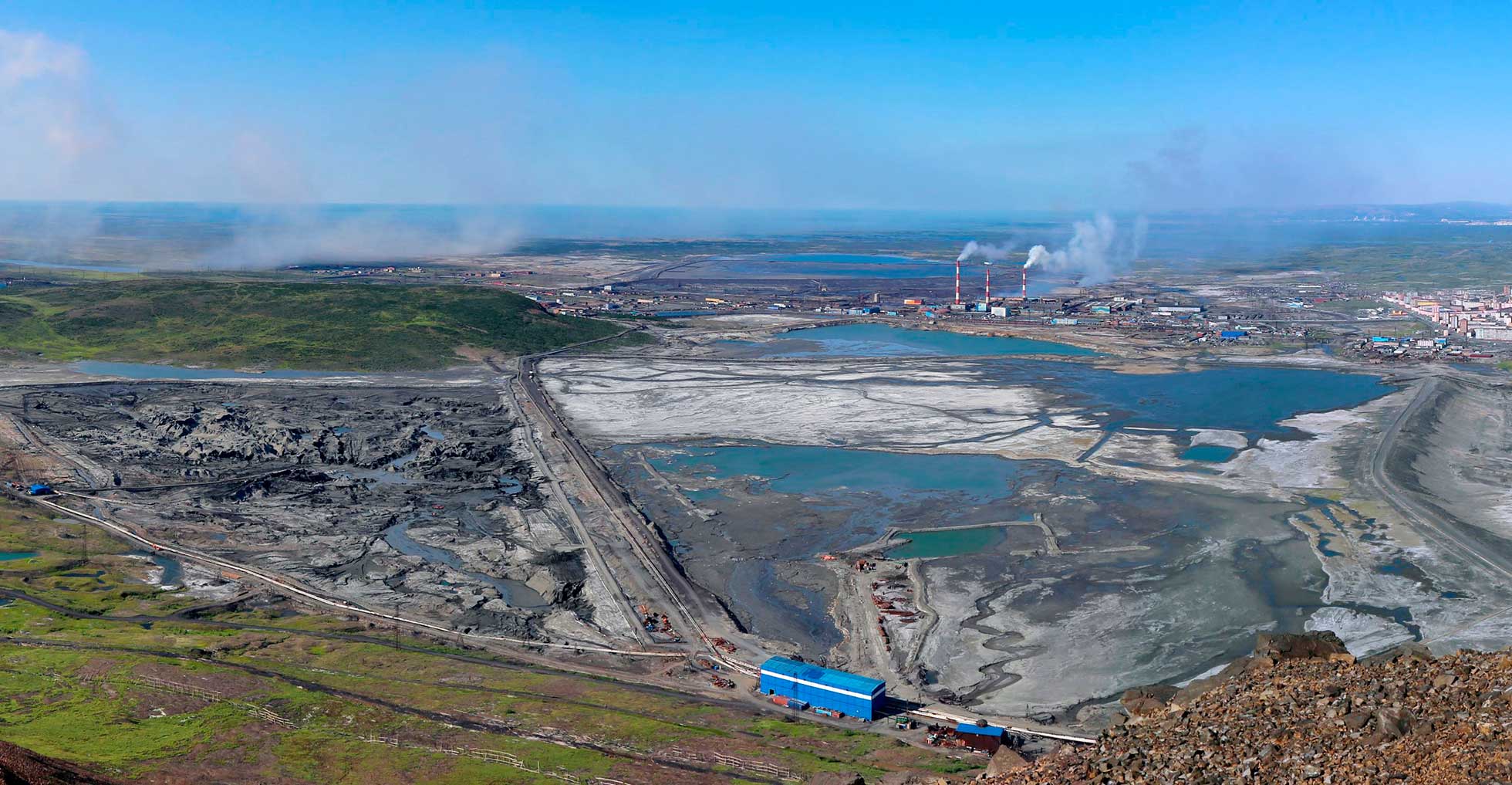
Nornickel Photobank
Every mining and metallurgical enterprise operates complex hydraulic structures for storing processing waste, or tailings. Tailings are a mix of rock and water containing substances used in ore processing. Safe construction, maintenance, and operation of tailings management facilities demonstrates the company's commitments to nature and people.
Tailings dump design
Any tailings management facility (TMF) generally relies on four structural components.
- A dam intended to prevent contamination of nearby areas; its outer walls are additionally reinforced and a waterproof layer is created inside the wall.
- A pond, a liquid holding structure, to contain fine tailings and settle water.
- Impermeable membrane lining the TMF bottom and sides to prevent contaminated water leakage into the ground.
- Drainage ditches and structures built around the tailings dump to manage the flow of water moving through fractured and porous rock. The water is then collected and fed back into the system or reused in production.
What happened in Brazil?
On 25 January 2019, the tailings dam of the Córrego do Feijão iron mine in Brumadinho, southeastern Brazil, collapsed. This released 12 million cubic meters of toxic mud downstream into the valley, which violently swept away administrative buildings, hotels, roads, houses and people. The mudslide made agricultural land unusable, completely destroyed the ecosystem of the Paraopeba River, killed hundreds of animals and more than 300 people (including the missing persons).
The cause of the largest tailings dam disaster in history was failure to comply with construction and maintenance regulations for these structures. Instead of building a proper tailings dam in Córrego do Feijão, successive tiers of waste were built directly onto previous ones. The dam had been operated without waterproofing or properly arranged drainage.
The Brumadinho tragedy triggered international outcry. The United Nations Environment Programme (UNEP), Principles for Responsible Investment (PRI) and International Council on Mining and Metals (ICMM) have launched the Global Tailings Management Review initiative. As a result, the Global Industry Standard on Tailings Management (GISTM) was released in August 2020, setting forth rigid requirements for the design, construction, operation and monitoring of tailings storage facilities.
The cause of the largest tailings dam disaster in history was failure to comply with construction and maintenance regulations for these structures. Instead of building a proper tailings dam in Córrego do Feijão, successive tiers of waste were built directly onto previous ones. The dam had been operated without waterproofing or properly arranged drainage.
The Brumadinho tragedy triggered international outcry. The United Nations Environment Programme (UNEP), Principles for Responsible Investment (PRI) and International Council on Mining and Metals (ICMM) have launched the Global Tailings Management Review initiative. As a result, the Global Industry Standard on Tailings Management (GISTM) was released in August 2020, setting forth rigid requirements for the design, construction, operation and monitoring of tailings storage facilities.
According to ICMM, by August 2025, only 67% of the 836 tailings dams managed by its members fully conform with GISTM.
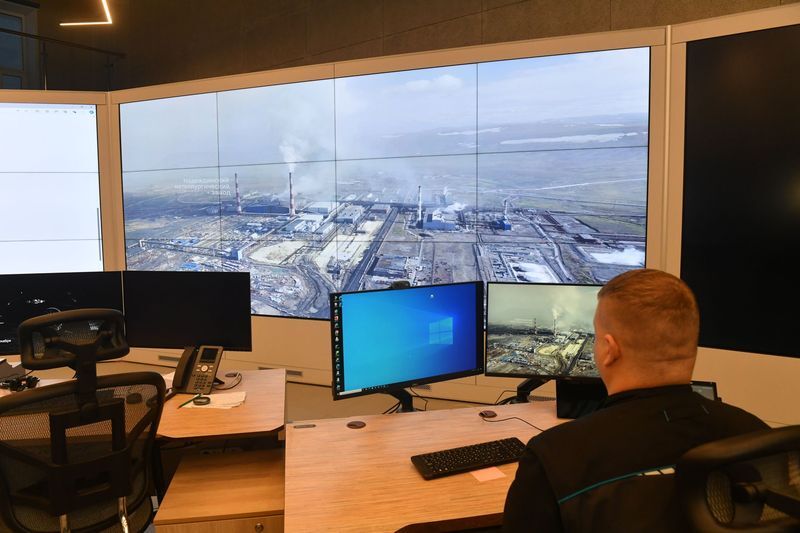
And what is the case with Nornickel?
While metallurgical companies around the world are objectively struggling with complications to bring TMFs into compliance with standards, Nornickel is taking its own journey. In 2023, the company adopted an in-house Tailings Management Policy and developed a Hydraulic Structure Operation Standard.
All seven of Nornickel's tailings and gypsum storage facilities comply with the safety criteria developed for each facility and are supported by regulatory approvals. All hydraulic structures undergo statutory inspections by Rostekhnadzor (Russian Federal Service for Environmental, Technological, and Nuclear Supervision) at least once every five years. With the same frequency, training drills are conducted with the Russian Emercom to practice and test emergency responses. But not a single emergency situation has occurred at the sites over the last five years.
All seven of Nornickel's tailings and gypsum storage facilities comply with the safety criteria developed for each facility and are supported by regulatory approvals. All hydraulic structures undergo statutory inspections by Rostekhnadzor (Russian Federal Service for Environmental, Technological, and Nuclear Supervision) at least once every five years. With the same frequency, training drills are conducted with the Russian Emercom to practice and test emergency responses. But not a single emergency situation has occurred at the sites over the last five years.
The global mining tailings management market size was estimated at USD 73.7 million in 2024 and is projected to reach USD 117.0 million by 2033 at a CAGR of 5.4% from 2025 to 2033.
Nornickel pays much attention to TSF safety monitoring, with one of its key parameters being continuous water level monitoring. The process, which has long been manual and split into sections, has recently been automated.
Nornickel's Sputnik business unit has introduced a unique bathymetric surveying system using unmanned boats and drones. The robot boat only weighs 16 kg, fits in the trunk of a car and can carry 20 kg of measuring devices. Moving on a preset route, it takes depth measurements approximately every 1–2 meters and creates millions of data points (as opposed to hundreds of points when measured by hand). From 2022, to measure the level of surface water in its tailing dumps, Nornickel has been using drones resistant to temperatures down to -20°C and strong winds, equipped with LiDAR and thermal imaging cameras.
Nornickel's Sputnik business unit has introduced a unique bathymetric surveying system using unmanned boats and drones. The robot boat only weighs 16 kg, fits in the trunk of a car and can carry 20 kg of measuring devices. Moving on a preset route, it takes depth measurements approximately every 1–2 meters and creates millions of data points (as opposed to hundreds of points when measured by hand). From 2022, to measure the level of surface water in its tailing dumps, Nornickel has been using drones resistant to temperatures down to -20°C and strong winds, equipped with LiDAR and thermal imaging cameras.
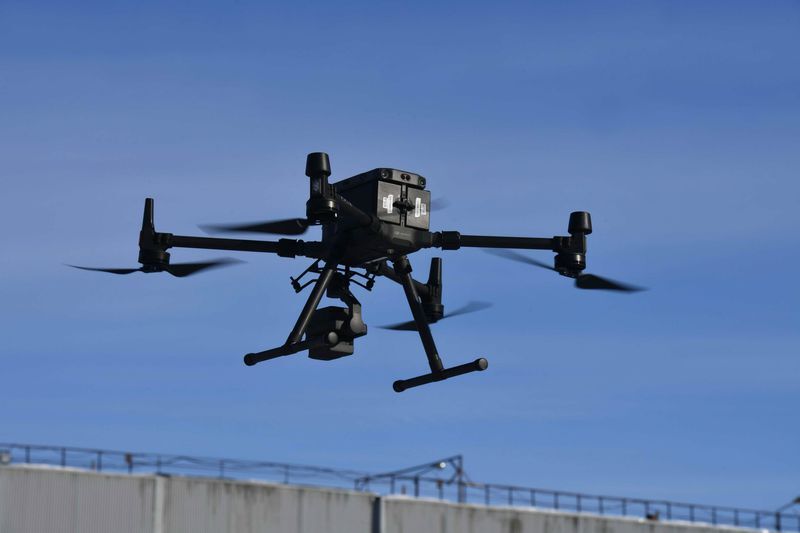
Experts put together data collected by drones on the water surface, and in the air and build a single digital model of the tailings storage facility enabling impoundment calculations, filling projections, and detection of deformations.
Nornickel is leading global trends and laying the technological foundation for risk management in an effort to shift from routine monitoring to predictive analytics. Initiatives like these have become a new reference for the industry in general, promoting process oriented performance and strict adherence to safety standards in TSF management.
Nornickel is leading global trends and laying the technological foundation for risk management in an effort to shift from routine monitoring to predictive analytics. Initiatives like these have become a new reference for the industry in general, promoting process oriented performance and strict adherence to safety standards in TSF management.
Nornickel Photobank
December, 2025
December, 2025