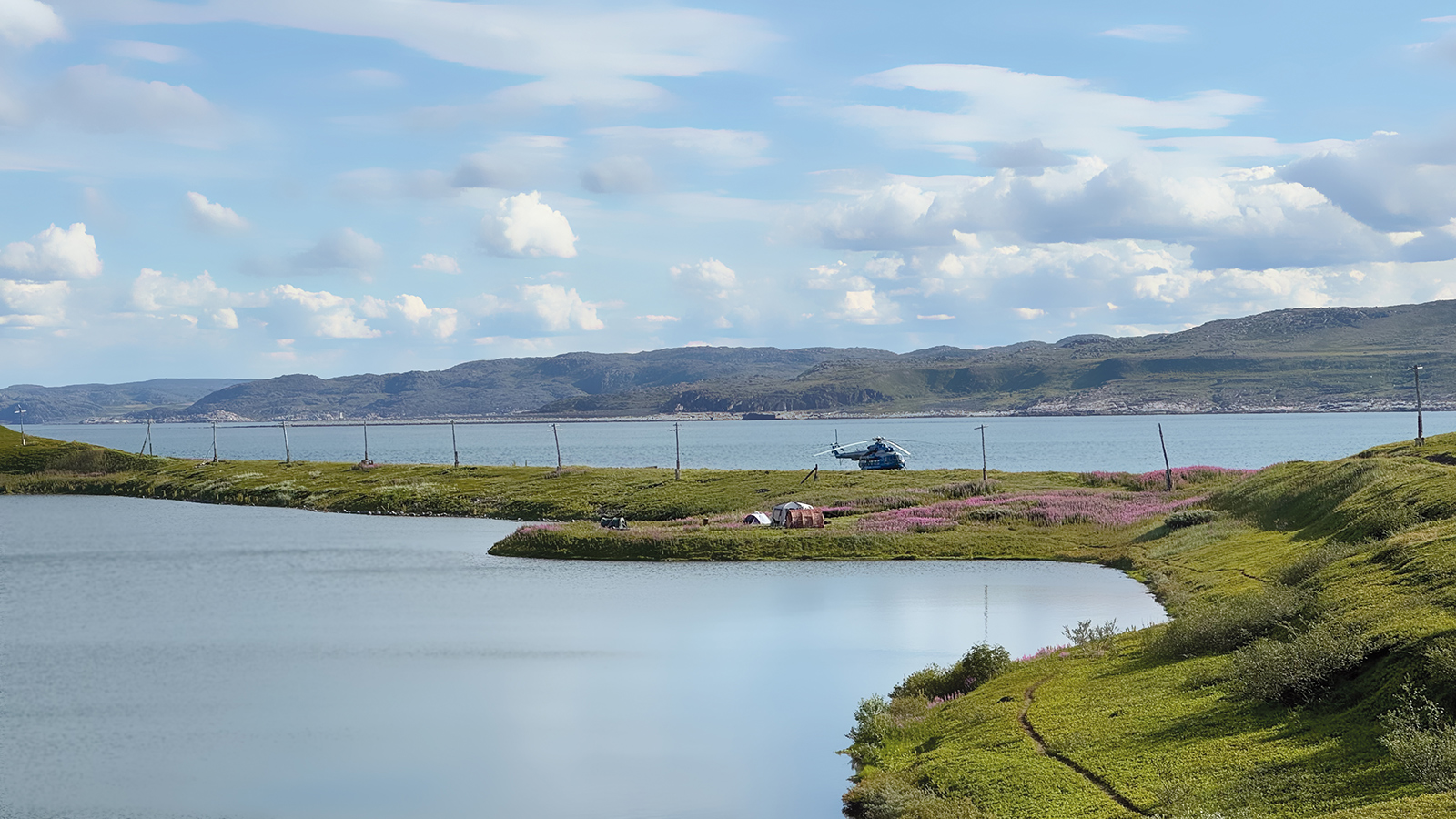
Nornickel's commitment to environmental science in its operational regions has become a cornerstone of its activities. A key focus is studying Arctic biodiversity and unique natural sites, including the relict Lake Mogilnoye on Kildin Island.
Studying Mogilnoye Lake offers not only insights into its past and present processes but also a potential wellspring of new scientific discoveries. Scientists' interests here dovetail with Nornickel's environmental policy, which systematically studies and safeguards biodiversity across this Russian region. The company collaborates with scientists on joint projects both near its industrial sites and in remote areas far from production facilities.
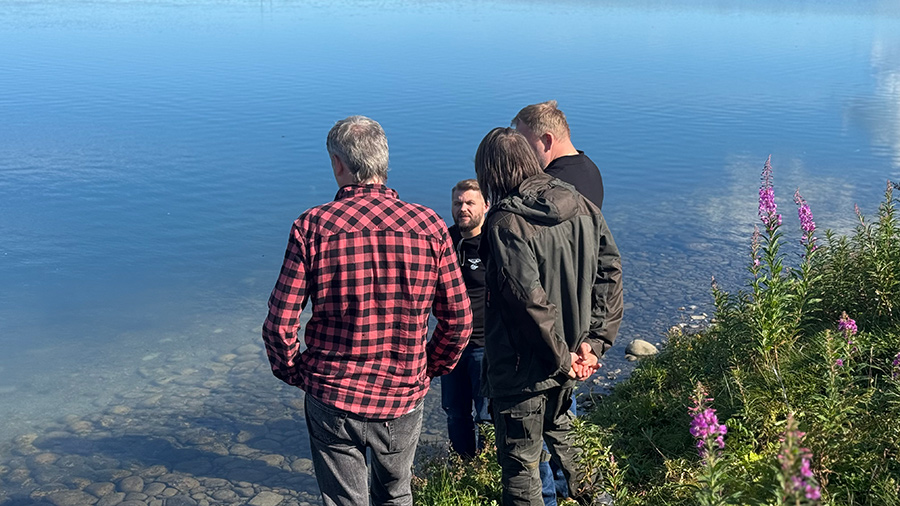
Last year, Nornickel launched a scientific expedition to Mogilnoye Lake in partnership with the Institute of Biology at the Karelian Research Center of the Russian Academy of Sciences and Kola MMC. This initiative opened a new chapter in the company's collaboration with fundamental science. Researchers conducted deep-water studies of the reservoir, home to the unique Kildin cod.
Expedition participant Denis Efremov—Senior Researcher at the Karelian Research Center's Laboratory of Fish and Aquatic Invertebrate Ecology (Russian Academy of Sciences), Candidate of Biological Sciences—revealed initial study results. They reveal climate change's toll on Lake Mogilnoye and its unique inhabitants.
Expedition participant Denis Efremov—Senior Researcher at the Karelian Research Center's Laboratory of Fish and Aquatic Invertebrate Ecology (Russian Academy of Sciences), Candidate of Biological Sciences—revealed initial study results. They reveal climate change's toll on Lake Mogilnoye and its unique inhabitants.
Layered “Pie”
Lake Mogilnoye on Kildin Island in the Kolsky District of the Murmansk Region is a rare relict water body, formed around 1,000 years ago. It's Russia's only lake with a multi-layered water structure. Once connected to the sea, a coastal barrier later sealed it off from the Barents Sea, creating an isolated ecosystem. Its hallmark? Distinct water layers stacked like a pie.
The top five-meter layer is crystal-clear freshwater. Below it mixes fresh and saltwater, while the third layer brims with high salinity—about 32 parts per thousand. The second layer steals the show: in summer, purple bacteria turn it a stunning pinkish hue, acting as a natural barrier by absorbing hydrogen sulfide and keeping it from rising.
Each layer hosts its own specialized life forms, thriving only under stable conditions. At the bottom, a hydrogen sulfide-rich layer remains lifeless.
Remarkably, the marine species that once thrived in the lake as part of a Barents Sea bay did not vanish. Isolated for about 1,000 years, they continue to flourish. This showcases microevolution: species thrust from familiar marine conditions adapted to a freshwater-dominated world. Scientists are drawn to these changes as a window into local adaptation processes.
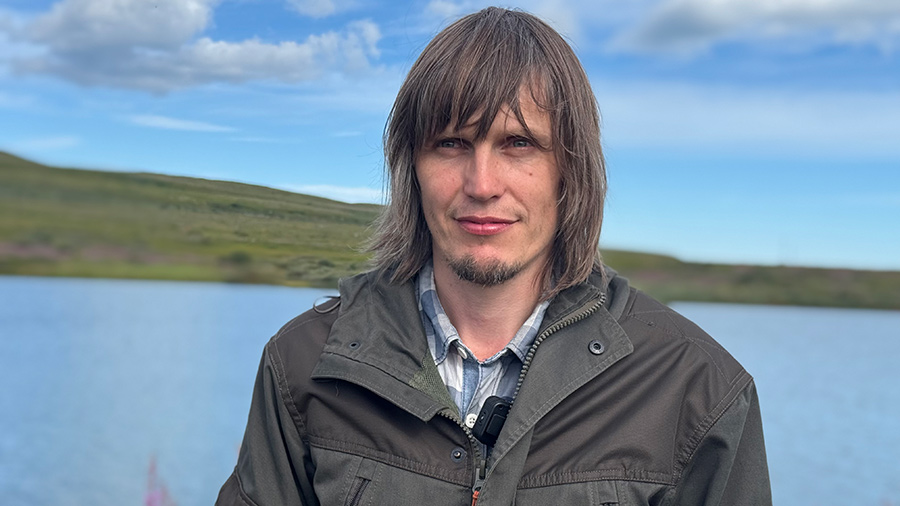
DENIS EFREMOV
Senior Researcher, Laboratory of Fish and Aquatic Invertebrate Ecology, Karelian Research Center of the Russian Academy of Sciences:
"During our summer expedition, we confirmed the lake's ongoing connection to the sea. We recorded water flow through the dam at five meters depth—previously known but now precisely measured. This enables constant exchange between the lake and the Barents Sea: surface currents flow into the lake at high tide, and outflow occurs at low tide. These dynamics were undocumented in scientific literature before. We also verified the lake's sensitivity to precipitation. Over the course of our expedition, a fierce storm battered the area for 3–4 days, accompanied by relentless rain that raised the water level by roughly 25 centimeters. This is unusual for typical lakes, which feature drainage outlets."
Scientific research was conducted at depth – expedition divers plunged into the depths wearing scuba gear for hands-on research. Their observations confirmed that three previously documented fish species still thrive in Lake Mogilnoye: Kildin cod, Atlantic eelpout, and three-spined stickleback.
The Hydrogen Sulfide Threat
The Kildin cod captured the expedition team's particular interest.
This species exemplifies microevolution after over 1,000 years of isolation in a relic lake featuring conditions found nowhere else on Earth. Insights into its survival strategies and threats could yield groundbreaking discoveries and inform assessments of Arctic closed-ecosystem dynamics. Notably, it has adapted to a stratified habitat with fluctuating salinity levels and a hydrogen sulfide-laden bottom layer. Yet prior research highlights risks from the expanding anoxic layer, which is rising and threatens to wipe out the local ichthyofauna—including this unique cod population.
The Hydrogen Sulfide Threat
The Kildin cod captured the expedition team's particular interest.
This species exemplifies microevolution after over 1,000 years of isolation in a relic lake featuring conditions found nowhere else on Earth. Insights into its survival strategies and threats could yield groundbreaking discoveries and inform assessments of Arctic closed-ecosystem dynamics. Notably, it has adapted to a stratified habitat with fluctuating salinity levels and a hydrogen sulfide-laden bottom layer. Yet prior research highlights risks from the expanding anoxic layer, which is rising and threatens to wipe out the local ichthyofauna—including this unique cod population.
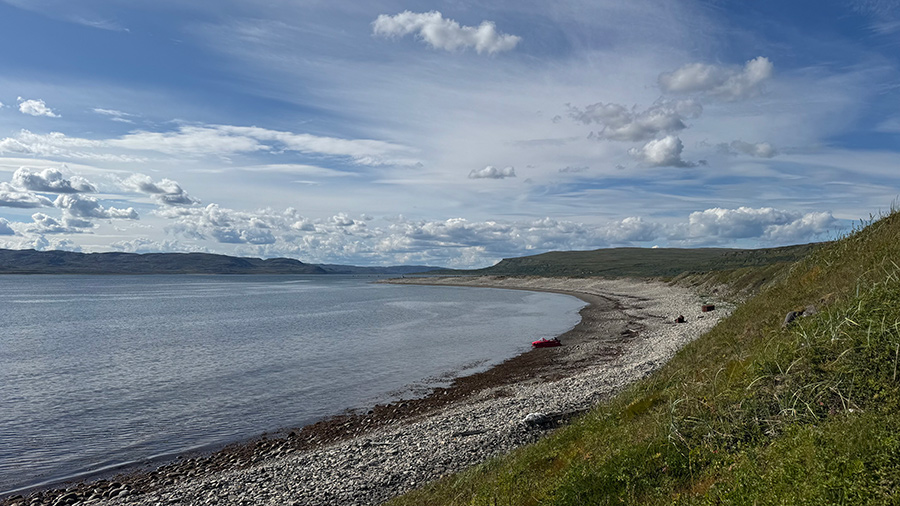
Kildin cod is an endemic species found exclusively in the world's only known habitat: the unique Mogilnoye Lake, a small (560 by 280 m) body of water on the northern Kola Peninsula, off the southeastern coast of Kildin Island.
The lake's distinctiveness stems from its stratified layers of varying salinity. Kildin cod inhabits the middle layer—a roughly 4 m thick zone with salinity levels of 8–28%—venturing occasionally into the upper layers near shallow areas to feed. This peculiar environment played a pivotal role in the fish's evolution as a distinct subspecies. The cod entered the lake during its time as a marine lagoon and became isolated when a spit-barrier severed it from the sea around the 10th century.
What sets Kildin cod apart from Atlantic cod? Atlantic cod is a bottom-dwelling fish. It lives near the seabed, foraging for food like crabs, shrimp, and small fish. It boasts a large mouth, powerful jaws, and sharp teeth—a true predator that typically grows to 1.5 meters.
Kildin cod, by contrast, is much smaller, with the largest specimens reaching just 70 cm. It lives only 7–8 years, far short of the 20 years its marine relative enjoys.
Over time in the lake's confined conditions, Kildin cod has evolved distinct external traits: a larger head, smaller mouth, shorter jaws, and weaker teeth.
These adaptations stem from the lake's poorer food base compared to the sea. The Kildin cod feeds on whatever is available—small crustaceans and worms—so it no longer needs a large mouth or powerful jaws. Evolution has streamlined away the excess.
Another striking difference lies in reproduction. Atlantic cod spawns near the bottom, where eggs sink, adhere to rocks, and hatch into fry.
The Kildin cod cannot afford this: hydrogen sulfide in the lake bottom would kill the eggs. Instead, it spawns directly into the water column. The buoyant eggs drift and develop mid-water, showcasing the remarkable ingenuity Lake Mogilnoye inhabitants have evolved to survive.
Scientists estimate that only about 200 individuals of this rare fish remain in the lake. Hydrogen sulfide's encroachment on their already limited habitat thus poses an existential threat to the Kildin cod.
Denis Efremov has proposed a hypothesis to explain this phenomenon.
The hydrogen sulfide layer expands as bottom-dwelling bacteria decompose organic matter entering the lake. We hypothesize that increased organic inputs are accelerating this buildup. These inputs primarily come from nearby shrubs, whose leaves flood the lake during autumn leaf fall or windy spells. Seabird waste also contributes, as birds nest on the shores and seek refuge in the calm waters during storms.
In this "fertilized" lake, filamentous algae explode in growth within the warm, desalinated upper layer—until storm winds and waves clump them into sinking masses. "This provides extra fuel for the bacteria," notes the researcher.
Denis Efremov has proposed a hypothesis to explain this phenomenon.
The hydrogen sulfide layer expands as bottom-dwelling bacteria decompose organic matter entering the lake. We hypothesize that increased organic inputs are accelerating this buildup. These inputs primarily come from nearby shrubs, whose leaves flood the lake during autumn leaf fall or windy spells. Seabird waste also contributes, as birds nest on the shores and seek refuge in the calm waters during storms.
In this "fertilized" lake, filamentous algae explode in growth within the warm, desalinated upper layer—until storm winds and waves clump them into sinking masses. "This provides extra fuel for the bacteria," notes the researcher.
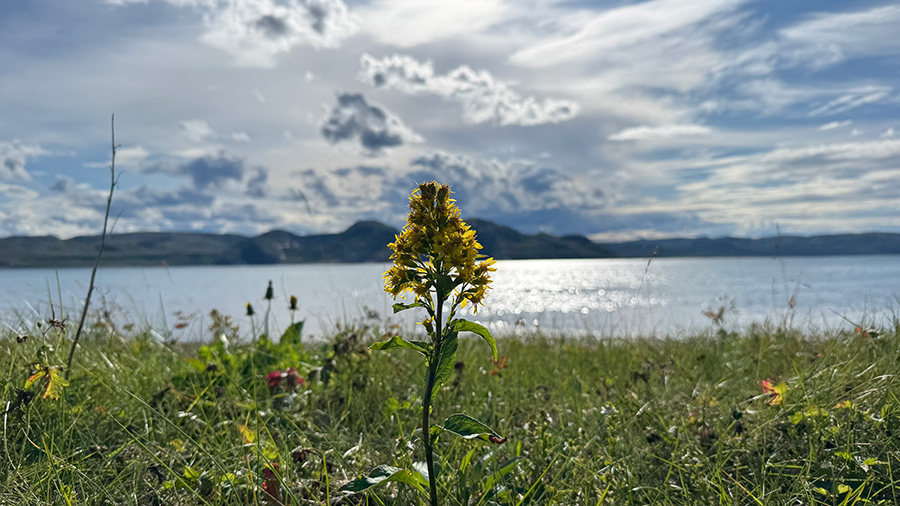
Laboratory Stage
At the end of 2025, several Kildin cod specimens were caught following the necessary permits from regulatory authorities. Laboratory analysis of these unique lake inhabitants continued. The research aims to perform genetic analysis and compare the Kildin cod with its Atlantic cod ancestor.
"We want to know whether any changes have appeared in this species—or if a thousand years is simply too short a time for evolution to take hold. Unlike the Barents Sea, Lake Mogilnoye is extremely nutrient-poor, with limited food diversity. The cod here lives ascetically, barely moving to conserve energy. We're keen to uncover any biochemical adaptations that may have evolved in response to such scarcity," shared the interviewee.
Remarkably, scientists will perform the first-ever genetic analysis of the Kildin cod's biomass, focusing on the bacteria that process food.
"We are interested in whether the Kildin cod's bacteria resemble those of the Atlantic cod. Perhaps some strains from a thousand years ago have been preserved—or maybe they've vanished entirely. We hope to gain new insights into the lake's unique inhabitants," noted the Candidate of Biological Sciences.
The Lake as a Litmus Test for Global Processes
According to Denis Efremov, Lake Mogilnoye holds unique scientific value as an indicator of Arctic biodiversity.
"The lake hosts a unique community of organisms that has endured for a thousand years. Climatologists observe that global warming intensifies in the Arctic due to various factors. By studying this water body as a model, scientists can predict how further climate change will unfold on a global scale. The lake also plays a key role in advancing the Integrated Ecosystem Condition Index (IECI)*. A wild, closed aquatic system like this can serve as a baseline for monitoring biodiversity at other sites. Heavy metal levels offer another key indicator; given the lake's remoteness from industry, they represent natural background concentrations. Samples have been collected and are currently under analysis," explains the interviewee.
At the end of 2025, several Kildin cod specimens were caught following the necessary permits from regulatory authorities. Laboratory analysis of these unique lake inhabitants continued. The research aims to perform genetic analysis and compare the Kildin cod with its Atlantic cod ancestor.
"We want to know whether any changes have appeared in this species—or if a thousand years is simply too short a time for evolution to take hold. Unlike the Barents Sea, Lake Mogilnoye is extremely nutrient-poor, with limited food diversity. The cod here lives ascetically, barely moving to conserve energy. We're keen to uncover any biochemical adaptations that may have evolved in response to such scarcity," shared the interviewee.
Remarkably, scientists will perform the first-ever genetic analysis of the Kildin cod's biomass, focusing on the bacteria that process food.
"We are interested in whether the Kildin cod's bacteria resemble those of the Atlantic cod. Perhaps some strains from a thousand years ago have been preserved—or maybe they've vanished entirely. We hope to gain new insights into the lake's unique inhabitants," noted the Candidate of Biological Sciences.
The Lake as a Litmus Test for Global Processes
According to Denis Efremov, Lake Mogilnoye holds unique scientific value as an indicator of Arctic biodiversity.
"The lake hosts a unique community of organisms that has endured for a thousand years. Climatologists observe that global warming intensifies in the Arctic due to various factors. By studying this water body as a model, scientists can predict how further climate change will unfold on a global scale. The lake also plays a key role in advancing the Integrated Ecosystem Condition Index (IECI)*. A wild, closed aquatic system like this can serve as a baseline for monitoring biodiversity at other sites. Heavy metal levels offer another key indicator; given the lake's remoteness from industry, they represent natural background concentrations. Samples have been collected and are currently under analysis," explains the interviewee.
*Integrated Ecosystem Condition Index (IECI) is a method for assessing ecosystem health, developed by the Siberian Branch of the Russian Academy of Sciences for Nornickel.
The methodology centers on collecting data about terrestrial and aquatic ecosystem components—flora, fauna, and soils—near Nornickel's industrial sites. These are compared against pristine background sites, whose indicators serve as the reference benchmark.
Currently, the IECI is being tested for applicability in Kola Peninsula nature reserves, including Pasvik, Lapland, and Kandalaksha. The diverse biological resources in these reserves make it scientifically compelling to verify the index's ability to detect industrial environmental impacts.
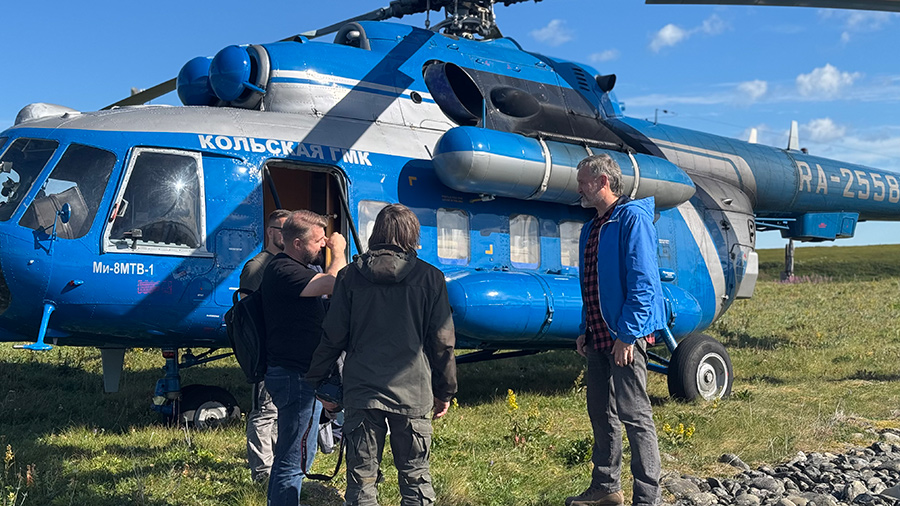
Global warming has already impacted the lake's ecosystem.
"Global warming has already disrupted Lake Mogilnoye’s ecosystem. According to data from our colleagues’ prior studies, about half of the species that inhabited the lake in the 20th century have vanished. This loss ties directly to the expanding hydrogen sulfide layer and the upper freshwater layer’s shift to brackish conditions. The lake’s characteristic stratification—most saline at the bottom, with salinity decreasing toward the surface—has long been documented. Until recently, the top layer was thought to be purely fresh water. Our observations now reveal it has become brackish, with detectable salt content. Meanwhile, the upper layer's freshness hinges on incoming precipitation—particularly summer rainfall and winter snow accumulation on the islands. Climate change has reduced these inputs, making the layer less fresh and driving the disappearance of typical freshwater species," shares Denis Efremov.
Laboratory studies of Kildin cod will continue throughout the year, enabling a long-term assessment of changes in relict Lake Mogilnoye. Direct research on this Red Book-listed species—adapted to the lake's stratified layers of varying salinity and hydrogen sulfide-rich bottom—could yield groundbreaking discoveries. Such Arctic investigations offer invaluable insights for science and industrial ecology, particularly in enhancing regional biodiversity within the company's operational area.
"Global warming has already disrupted Lake Mogilnoye’s ecosystem. According to data from our colleagues’ prior studies, about half of the species that inhabited the lake in the 20th century have vanished. This loss ties directly to the expanding hydrogen sulfide layer and the upper freshwater layer’s shift to brackish conditions. The lake’s characteristic stratification—most saline at the bottom, with salinity decreasing toward the surface—has long been documented. Until recently, the top layer was thought to be purely fresh water. Our observations now reveal it has become brackish, with detectable salt content. Meanwhile, the upper layer's freshness hinges on incoming precipitation—particularly summer rainfall and winter snow accumulation on the islands. Climate change has reduced these inputs, making the layer less fresh and driving the disappearance of typical freshwater species," shares Denis Efremov.
Laboratory studies of Kildin cod will continue throughout the year, enabling a long-term assessment of changes in relict Lake Mogilnoye. Direct research on this Red Book-listed species—adapted to the lake's stratified layers of varying salinity and hydrogen sulfide-rich bottom—could yield groundbreaking discoveries. Such Arctic investigations offer invaluable insights for science and industrial ecology, particularly in enhancing regional biodiversity within the company's operational area.
Photo: by Denis Plotnikov / Kola MMC Press Service