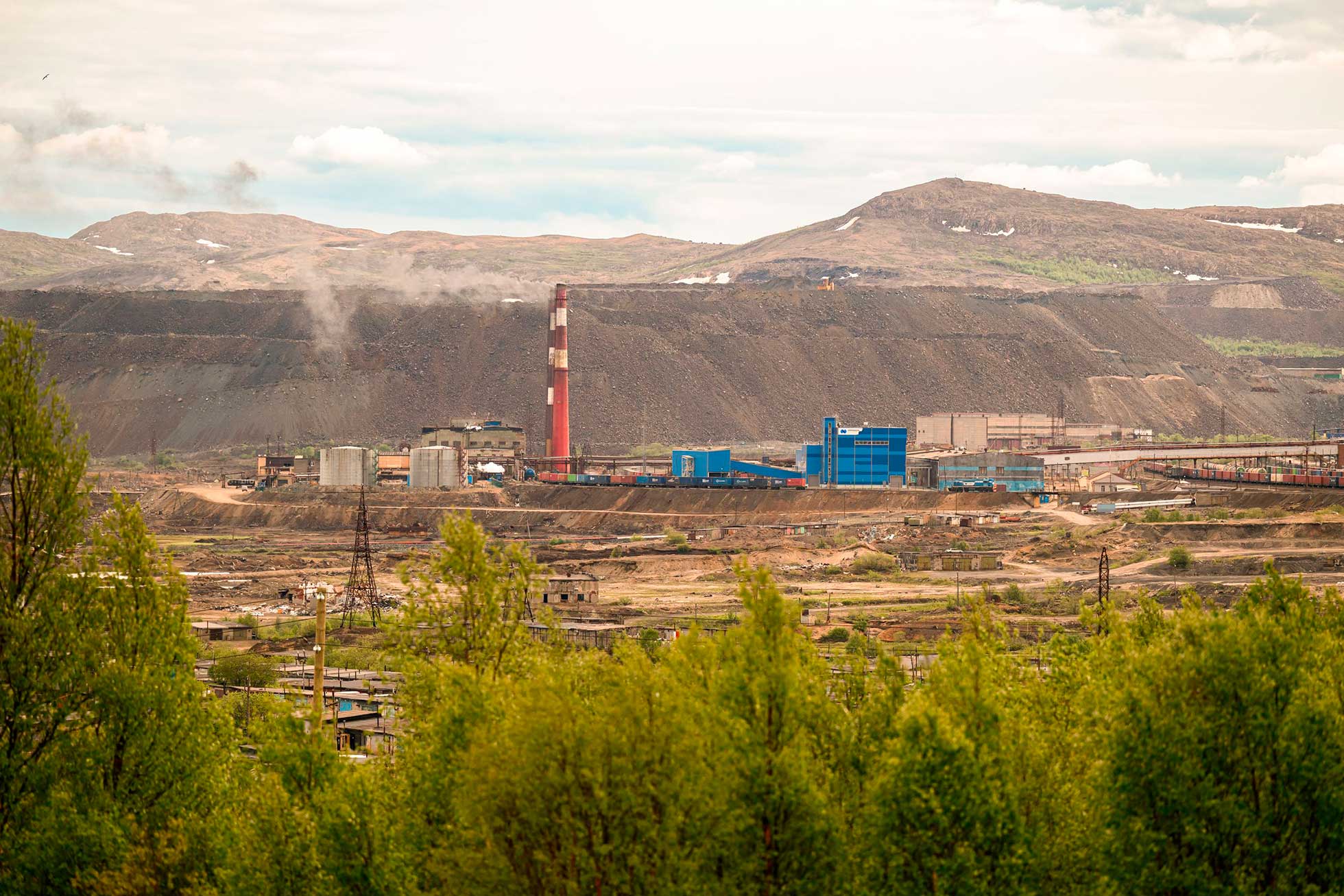
Nornickel Photobank
Kola MMC is one of Nornickel's waste reuse champions. For three years now, the company has been running a cross-functional project covering all of its business units.
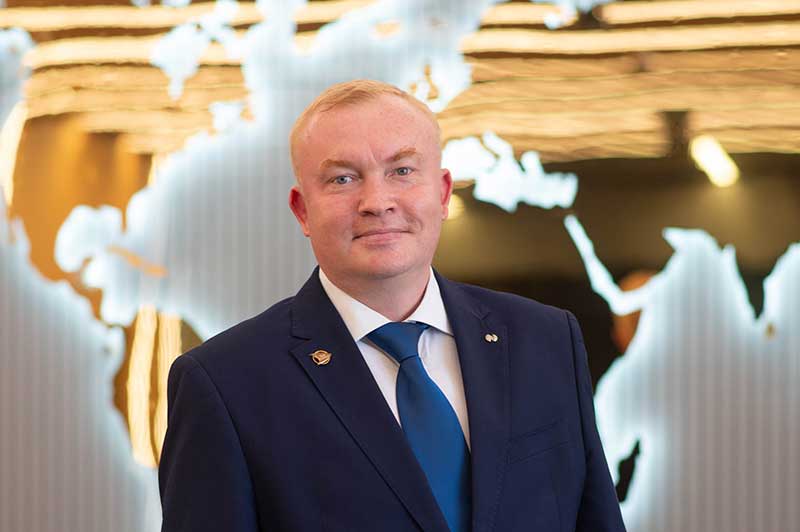
Aleksander Lisoy, head of environmental strategy and EMS at Kola MMC says the company has learned how to manage production waste successfully and make money doing it., He speaks about the company's circular economy initiatives.
– Which production waste reuse projects do you believe to be most promising and how are they progressing?
– In addition to long-common scrap metal and waste paper, we deal with used oil, various types of plastic, wood and rubber items, large tires, graphite electrodes, and crushed stone from demolished buildings.
– In addition to long-common scrap metal and waste paper, we deal with used oil, various types of plastic, wood and rubber items, large tires, graphite electrodes, and crushed stone from demolished buildings.
Kola MMC generates ca. 54 thousand tonnes of non-mineral waste. In 2024, more than 25 thousand tonnes (~45%) of materials have been processed for reuse, allowing the company to earn more than RUB 3 million on their sale. Meanwhile, waste landfilling costs RUB 5,000 per tonne. Kola MMC's waste sale and disposal initiatives help the company save ca. RUB 16 million every year.
Waste reuse is not just a source of revenue for the business but also a substantial environmental contribution. Some types of waste are prohibited by law from being placed in landfills and must be disposed of. For instance, some time ago we recycled used oil, but now we sell it to a company that provides regeneration, or cleaning services. We now have an interest in collecting the used oil. We sold 35 tonnes in 2024 and more than 110 tonnes in 10 months of 2025, making pretty good money on it.
In addition to used oil, the company delivers solid sales of graphite electrodes, previously disposed of in landfills. Vanadium catalysts that are fully restored at specialized facilities. Most large-size tires can also be restored, while the rest are recycled.
However, the project is associated with certain costs. In particular, plastic is a light material taking a lot of space. To increase sales, we purchased a crusher and two compressors to transform plastic into briquettes that we dispatch to specialized facilities.
In addition to used oil, the company delivers solid sales of graphite electrodes, previously disposed of in landfills. Vanadium catalysts that are fully restored at specialized facilities. Most large-size tires can also be restored, while the rest are recycled.
However, the project is associated with certain costs. In particular, plastic is a light material taking a lot of space. To increase sales, we purchased a crusher and two compressors to transform plastic into briquettes that we dispatch to specialized facilities.
– How hard is it to find a sales market for recycled raw materials?
– Three years into the project, we have explored a massive market segment. The hardest part is logistics. All the processing plants interested in our raw materials are located near Moscow or St Petersburg which means a hauling distance of 1500 kilometers and associated logistics costs.
It's not easy to find a sales market for wooden products. We manage to sell a portion of them to the people, the rest remain with us exposing the company to disposal costs. Wood logging businesses are not interested in such raw materials since they deal with high-quality timber. A solution can be found in the procurement of wood briquetting machines. The Arctic is an area of acute firewood scarcity: with tundra all round, there's very little forest and quite a few private houses. Briquettes will be in demand among local residents.
We are thinking about buying a large tire shredding machine as we can't restore the entire quantity. Many decisions today are driven by the sales market and coordination with municipal authorities. If we make rubber crumb or tile, we need to understand that these products will be wanted by the market.
– Three years into the project, we have explored a massive market segment. The hardest part is logistics. All the processing plants interested in our raw materials are located near Moscow or St Petersburg which means a hauling distance of 1500 kilometers and associated logistics costs.
It's not easy to find a sales market for wooden products. We manage to sell a portion of them to the people, the rest remain with us exposing the company to disposal costs. Wood logging businesses are not interested in such raw materials since they deal with high-quality timber. A solution can be found in the procurement of wood briquetting machines. The Arctic is an area of acute firewood scarcity: with tundra all round, there's very little forest and quite a few private houses. Briquettes will be in demand among local residents.
We are thinking about buying a large tire shredding machine as we can't restore the entire quantity. Many decisions today are driven by the sales market and coordination with municipal authorities. If we make rubber crumb or tile, we need to understand that these products will be wanted by the market.
Recycled waste from building demolition is used in production site planning. We have engaged contractors to crush concrete and recycle rubble into specific-size fractions. Such material can also be used in road construction at production sites.
Kola MMC operates a retail store to sell to individual consumers the surplus stock items handed over by the Procurement Unit: anything still fit for use but no longer needed in production. Apart from surplus stock, we also turn in wooden pallets, plastic and metal barrels, and even railroad ties. The quantities are still small but we will continue to develop this line of business, especially amid demand for these materials: anything will come in handy in a household.
– Do you have reuse projects for non-mineral waste that contains valuable components?
– We are looking into reducing the amount of landfilled solid waste from filter cloth. In 2025, we cleaned up one of the landfills and extracted more than 4 thousand tonnes of cloth containing non-ferrous metals. Our main job is to get them out and reintroduce into production to address the generation of such raw materials that exceeds 600 tonnes per year. In pursuit of this disposal goal, we intend to purchase an incineration plant to extract valuable components.
– Does mineral waste find applications?
– Kola MMC annually generates over 6 million tonnes of mineral waste in the form of tailings and waste rock (overburden). Moreover, processes are associated with the formation of ferrous cake containing iron and nickel (from hydrometallurgical processes) and nickel sludge from wastewater treatment, which are industrial products.
Kola MMC operates a retail store to sell to individual consumers the surplus stock items handed over by the Procurement Unit: anything still fit for use but no longer needed in production. Apart from surplus stock, we also turn in wooden pallets, plastic and metal barrels, and even railroad ties. The quantities are still small but we will continue to develop this line of business, especially amid demand for these materials: anything will come in handy in a household.
– Do you have reuse projects for non-mineral waste that contains valuable components?
– We are looking into reducing the amount of landfilled solid waste from filter cloth. In 2025, we cleaned up one of the landfills and extracted more than 4 thousand tonnes of cloth containing non-ferrous metals. Our main job is to get them out and reintroduce into production to address the generation of such raw materials that exceeds 600 tonnes per year. In pursuit of this disposal goal, we intend to purchase an incineration plant to extract valuable components.
– Does mineral waste find applications?
– Kola MMC annually generates over 6 million tonnes of mineral waste in the form of tailings and waste rock (overburden). Moreover, processes are associated with the formation of ferrous cake containing iron and nickel (from hydrometallurgical processes) and nickel sludge from wastewater treatment, which are industrial products.
70% of ferrous cake is iron. A special landfill is required for its disposal. Kola MMC has developed a plan to reuse ferrous cake in production. One of the options is to set up an in-house recycling capacity to obtain semi-finished products in economic demand. Surely, it would be easier to sell it, and we do have the buyers, but most of them are only willing to purchase processed ferrous cake.
The same is the case with nickel-containing cakes – a product of process wastewater neutralization and sedimentation. For ferrous metals to settle in the water, we use lime milk that runs into a collection tank along with a portion of ferrous metals for subsequent settlement. These depositions get extracted and dewatered to be fed back into production as valuable elements. We are currently studying how we can reuse these industrial products in Kola MMC's operations, with the engagement of modern process equipment companies for some cases.
As for tailings, they are valuable for their potential to absorb carbon dioxide. Kola MMC emits ca. 580 thousand tonnes CO2, including 30 thousand that can be absorbed in our tailings storage facilities. This is a major step towards carbon neutrality, even with passive absorption. This effect can be intensified with the introduction of special reagents. In collaboration with the Institute of Mineralogy, we are evaluating these options.
– How do you see circular economy evolve in 10-15 years and is Kola MMC prepared to address the changes?
– This area is set to develop rapidly. The Russian laws on industrial waste management by manufacturers get tougher every year. More and more materials and substances get prohibited from landfill disposal, plus the Circular Economy national project is underway.
Kola MMC is prepared to comply with the new requirements. The cross-functional waste management project already involves numerous business units, from sales and production to research institutes.
I believe that in 10–15 years, Kola MMC will be able to reuse almost 100% of the waste generated in its operations. This progress will be driven by government effort and the local Arctic residents passionate to leave behind a comfortable environment for future generations instead of waste piles.
The same is the case with nickel-containing cakes – a product of process wastewater neutralization and sedimentation. For ferrous metals to settle in the water, we use lime milk that runs into a collection tank along with a portion of ferrous metals for subsequent settlement. These depositions get extracted and dewatered to be fed back into production as valuable elements. We are currently studying how we can reuse these industrial products in Kola MMC's operations, with the engagement of modern process equipment companies for some cases.
As for tailings, they are valuable for their potential to absorb carbon dioxide. Kola MMC emits ca. 580 thousand tonnes CO2, including 30 thousand that can be absorbed in our tailings storage facilities. This is a major step towards carbon neutrality, even with passive absorption. This effect can be intensified with the introduction of special reagents. In collaboration with the Institute of Mineralogy, we are evaluating these options.
– How do you see circular economy evolve in 10-15 years and is Kola MMC prepared to address the changes?
– This area is set to develop rapidly. The Russian laws on industrial waste management by manufacturers get tougher every year. More and more materials and substances get prohibited from landfill disposal, plus the Circular Economy national project is underway.
Kola MMC is prepared to comply with the new requirements. The cross-functional waste management project already involves numerous business units, from sales and production to research institutes.
I believe that in 10–15 years, Kola MMC will be able to reuse almost 100% of the waste generated in its operations. This progress will be driven by government effort and the local Arctic residents passionate to leave behind a comfortable environment for future generations instead of waste piles.
Nornickel Photobank
December, 2025
December, 2025